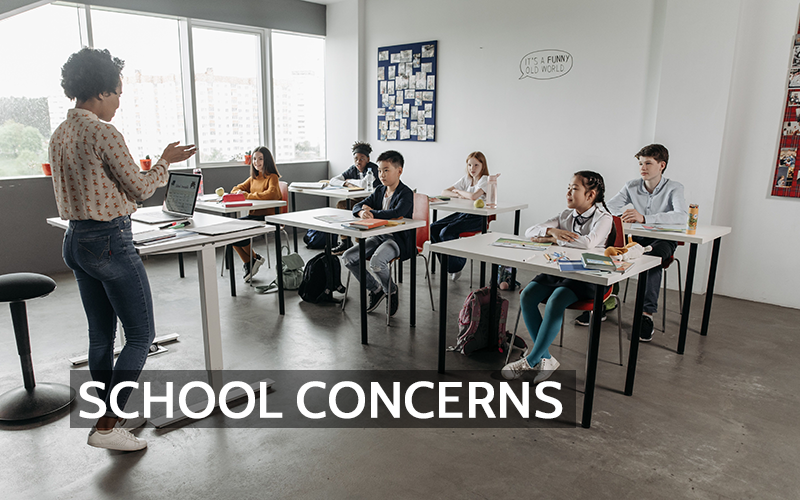
Children spend a large portion of their day inside school buildings. A classroom may contain twenty or thirty students, a teacher, computers, furniture, cleaning products, art supplies, and backpacks, all inside a relatively small space for hours at a time.
That makes indoor air quality an important part of the learning environment. Poor ventilation can allow carbon dioxide and other indoor pollutants to accumulate, while moisture problems, dust, outdoor pollution, and allergens can aggravate asthma and respiratory symptoms. EPA guidance specifically identifies good indoor air quality as an important component of healthy, productive school environments.
Why Children Require Special Attention
Children are not simply smaller adults. Their respiratory systems are still developing, and they generally breathe more air relative to their body size than adults. Many children also live with asthma, allergies, or other conditions that make them particularly sensitive to particles, mold, vehicle exhaust, and other pollutants.
Schools introduce additional challenges because classrooms are densely occupied and their ventilation systems may be decades old. Gyms, cafeterias, science laboratories, art rooms, workshops, and portable classrooms can each have different air-quality concerns.
The goal is therefore not merely to keep the building comfortable. Schools must control several different sources at once.
Carbon Dioxide Can Reveal Poor Ventilation
One of the most useful measurements in a classroom is carbon dioxide, or CO₂.
Students and teachers continuously produce CO₂ when they breathe. In a properly ventilated classroom, outdoor air dilutes that CO₂ and carries some of it away. If ventilation is insufficient for the number of people in the room, the concentration gradually rises.
A CO₂ monitor can therefore act as an indicator of whether enough outdoor air is entering an occupied classroom. It does not measure every aspect of indoor air quality, and there is no single CO₂ number that declares a classroom healthy or unhealthy. Elevated readings can, however, help identify rooms where ventilation deserves investigation.
Schools may respond by adjusting mechanical ventilation, opening windows when weather and outdoor air quality permit, repairing dampers, changing operating schedules, or correcting problems with HVAC equipment.
Improving ventilation may also support learning. Research has found associations between classroom ventilation, CO₂ concentrations, attention, attendance, and academic performance. CO₂ itself should not be treated as the sole cause of poor learning outcomes; it often serves as a convenient indicator that people-generated pollutants and stale air are not being removed efficiently.
Filtration Handles a Different Problem
Ventilation and filtration perform different jobs.
Ventilation dilutes indoor pollutants with outdoor air. Filtration removes particles from air moving through an HVAC system.
Heating and cooling systems can use efficient filters to capture dust, pollen, smoke particles, and other airborne material. Portable HEPA air cleaners can provide additional filtration in individual classrooms when appropriately sized and maintained.
This becomes particularly important during wildfire smoke events, high outdoor particulate pollution, or respiratory-virus seasons. Sometimes bringing in more outdoor air is beneficial; at other times, outdoor air may itself contain smoke or pollution. Schools must balance ventilation with filtration and current outdoor conditions.
Moisture and Mold Need Fast Attention
Water is one of the most persistent threats to healthy school buildings.
Roof leaks, plumbing problems, condensation, wet carpets, poorly drained foundations, and malfunctioning HVAC equipment can create damp materials where mold grows. EPA guidance emphasizes that correcting the underlying moisture source is essential rather than simply cleaning visible mold.
Schools often contain materials that readily absorb water, including ceiling tiles, drywall, carpets, books, and insulation. Maintenance staff therefore play a major role in indoor air quality. A leaking pipe repaired quickly may prevent a much larger problem involving mold, odors, damaged materials, and classroom closures.
Humidity control is also important. Air-conditioning and ventilation systems must remove enough moisture during warm weather without creating cold surfaces where condensation develops.
Asthma Triggers Can Hide Throughout the Building
Dust is not the only concern for students with asthma.
Mold, pests, animal dander, pollen, cleaning chemicals, fragrances, and outdoor pollution can all aggravate sensitive airways. Integrated pest-management programs can reduce cockroaches and rodents without relying excessively on pesticides, while careful cleaning removes dust without unnecessarily introducing strong fragrances or chemical vapors.
Classroom pets, art supplies, dry-erase markers, paints, adhesives, science experiments, and maintenance products can introduce additional particles or volatile organic compounds.
The solution is usually source control: identify what is releasing the pollutant and reduce or remove it before depending entirely on ventilation to dilute it.
The School Parking Lot Matters Too
Indoor air quality can begin outside the building.
School buses, parent vehicles, delivery trucks, and maintenance equipment may idle near doors, windows, playgrounds, or ventilation intakes. Exhaust can contain particulate matter, nitrogen oxides, carbon monoxide, and other combustion pollutants.
Anti-idling programs encourage drivers to shut engines off when extended idling is unnecessary. Cleaner school buses, electric buses, and careful placement of loading areas can further reduce children’s exposure to traffic pollution around school grounds.
Monitoring Turns Complaints Into Information
Schools increasingly have access to affordable sensors that can track CO₂, particulate matter, temperature, and humidity.
These devices can help identify patterns. A classroom that develops high CO₂ every afternoon may need additional ventilation. Rising humidity near one part of the building might point toward a moisture problem. Particle concentrations that increase during pickup time could suggest outdoor exhaust entering through a nearby intake.
Sensors do not replace professional building assessments, but they can help maintenance staff decide where to investigate.
The EPA’s Indoor Air Quality Tools for Schools program encourages schools to approach air quality as an ongoing management responsibility involving administrators, teachers, custodians, facilities staff, nurses, parents, and students.
A healthy classroom does not need to resemble a laboratory cleanroom. It needs enough fresh air, effective particle control, dry building materials, carefully managed pollution sources, and systems that are maintained before problems become emergencies.
Children come to school to learn. Protecting the air around them helps ensure that the building itself does not make that job harder.
References
- https://www.epa.gov/iaq-schools
- https://www.epa.gov/iaq-schools/why-indoor-air-quality-important-schools
- https://www.epa.gov/iaq-schools/reference-guide-indoor-air-quality-schools
- https://www.epa.gov/iaq-schools/indoor-air-quality-tools-schools-action-kit
- https://www.epa.gov/iaq-schools/how-does-indoor-air-quality-schools-affect-asthma
- https://www.epa.gov/mold/mold-and-indoor-air-quality-schools
- https://www.epa.gov/schools/idle-free-schools-toolkit-healthy-school-environment
- https://www.epa.gov/dera/school-bus-idle-reduction
- https://www.cdc.gov/niosh/ventilation/guidelines/index.html
- https://www.ashrae.org/file%20library/about/position%20documents/pd-on-indoor-carbon-dioxide-english.pdf
- https://www.ashrae.org/file%20library/technical%20resources/free%20resources/design-guidance-for-education-facilities_version-2.0.pdf
- https://pubmed.ncbi.nlm.nih.gov/17100667/