Swimming pools are usually associated with water quality rather than air quality. Operators measure chlorine, adjust pH, filter the water, and watch for microorganisms.
But chemistry does not stop at the water’s surface.
Pool water continuously exchanges gases and tiny droplets with the atmosphere above it. Swimmers introduce sweat, skin cells, cosmetics, urine, and other organic material that can react with disinfectants. Splashing, fountains, jets, and vigorous swimming then help move some of those reaction products into the air.
For outdoor pools, the open atmosphere usually provides enormous dilution. Inside an enclosed pool, however, ventilation becomes just as important as water treatment.
Chlorine Is Only the Beginning
Chlorine is commonly used because it kills microorganisms that might otherwise spread disease between swimmers.
Once chlorine enters a busy swimming pool, it encounters much more than water.
Sweat and urine contain nitrogen-containing compounds. Skin cells, personal-care products, dirt, and other material also enter the pool as people swim.
When chlorine reacts with these materials, it can form compounds known collectively as chloramines.
Some chloramines remain dissolved in the water while others can move into the air. One particularly important compound in indoor pool environments is trichloramine, sometimes called nitrogen trichloride.
These chemicals can irritate the eyes, nose, and respiratory tract.
Ironically, the familiar strong “pool smell” that people often associate with abundant chlorine can actually indicate that chlorine has reacted with contaminants introduced into the water.
Why Indoor Pools Are Different
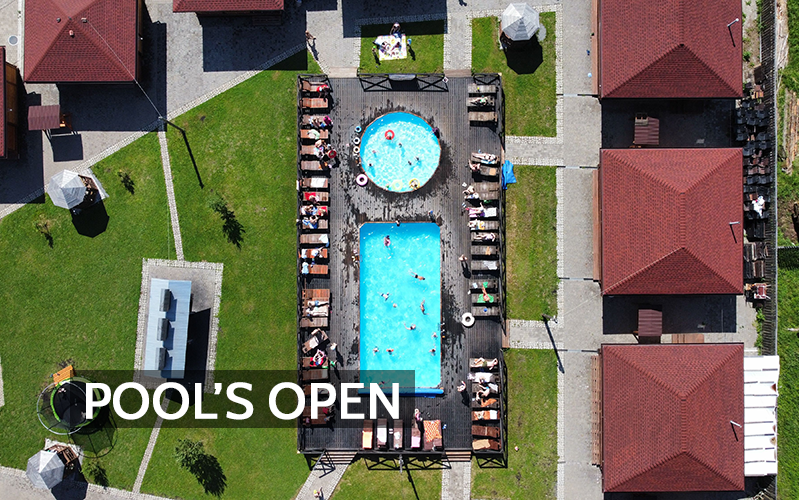
Outdoor pools have a major advantage: an effectively unlimited supply of surrounding air.
Wind and natural atmospheric mixing usually carry released chemicals away from the water relatively quickly.
An indoor pool traps the same emissions inside a building.
These facilities, sometimes called natatoriums, require specialized heating, ventilation, and air-conditioning systems. The challenge is not simply replacing warm air with cold outdoor air. Pool buildings must simultaneously manage temperature, humidity, chemical contaminants, energy consumption, and enormous amounts of water evaporation.
Poor air distribution can create localized problems even when the building technically receives enough ventilation.
Chloramines are released directly from the water, meaning concentrations can be greatest in the breathing zone close to the pool surface.
That is exactly where swimmers breathe.
Splashing Changes the Atmosphere
A perfectly calm pool and a crowded water park do not produce the same atmospheric conditions.
Swimming disturbs the surface and increases contact between water and air.
Diving, splashing, fountains, waterfalls, wave machines, spray features, and bubbling spas increase that contact even further.
Greater agitation can increase the rate at which volatile compounds leave the water.
This helps explain why busy recreational pools and water parks may present a greater air-quality challenge than lightly used lap pools of similar size.
Warm water can increase emissions as well.
Spas and hot tubs combine high temperatures with jets and bubbles that intentionally create aerosols. They therefore require particularly careful water treatment and ventilation.
Humidity Is an Air-Quality Problem Too
Indoor pools constantly evaporate water.
Without humidity control, all that moisture can accumulate inside the building.
High humidity may make occupants uncomfortable, but the consequences extend much further. Water can condense on windows, ceilings, pipes, walls, and structural components.
Persistent moisture can damage buildings and create conditions favorable for microbial growth.
Pool air can also be chemically corrosive. Moisture carrying chlorine-related compounds may attack metal structures, ductwork, electrical components, and other building materials over time.
Modern natatorium ventilation therefore performs several jobs at once: controlling humidity, delivering fresh air, removing contaminated air, preventing condensation, and keeping pool air from migrating into neighboring parts of the building.
Ventilation Has to Reach the Water
Simply installing a large exhaust fan does not guarantee good pool air.
Air has to move through the correct parts of the room.
Indoor pools often have high ceilings, creating opportunities for warm air to rise while pollutants remain closer to swimmers.
Well-designed systems distribute conditioned air through occupied areas and remove contaminated air strategically. Exhaust near the water level can help capture pollutants before they spread throughout the building.
Pool spaces are also commonly maintained at a slightly lower pressure than adjoining rooms. This encourages air to move into the pool area rather than pushing humid, chloramine-containing air into hallways, offices, locker rooms, or other building spaces.
Water chemistry and ventilation must work together. Increasing ventilation cannot fully correct a pool whose water chemistry is poorly maintained.
Pools Can Produce More Serious Chemical Hazards
Normal chloramine exposure is very different from an accidental release of chlorine gas.
Pool facilities commonly store concentrated chlorine products and acids used to control pH. If incompatible chemicals are accidentally mixed, toxic chlorine gas can be generated.
Equipment failures can create similar problems. If chemical feed pumps continue operating while water circulation stops, concentrated chlorine and acid can potentially mix inside plumbing. When circulation resumes, accumulated gas can be released into the pool area.
Modern public-pool systems use engineering controls to prevent this situation, including equipment that shuts chemical feeders down when water flow stops.
Chemical rooms should also be separated, appropriately ventilated, and designed to contain spills.
What About Saltwater Pools?
Saltwater pools are sometimes assumed to be chlorine-free.
They are not.
A saltwater system uses electrolysis to convert dissolved salt into chlorine compounds that disinfect the water.
The chlorine is generated on-site rather than repeatedly added as traditional chlorine products, but it ultimately performs a similar job.
Swimmers can therefore still introduce nitrogen-containing material that reacts with chlorine, meaning saltwater pools can also produce chloramines.
Good water chemistry, swimmer hygiene, and ventilation remain important.
Aerosols Can Carry Biological Hazards
Not every pool-related air concern is purely chemical.
Warm, aerated water can generate tiny droplets that remain suspended in the air.
Hot tubs are an important example because improperly maintained systems can support bacteria such as Legionella. Jets and bubbles then create aerosols that can be inhaled.
This is one reason maintaining disinfectant concentration, temperature management, circulation, and filtration is so important in spas and similar aquatic systems.
Pools are therefore unusual air environments because the water itself can become a source of both chemical vapors and airborne droplets.
Swimmers Help Control the Air
Air-quality management begins before anyone enters the water.
Showering removes sweat, cosmetics, dirt, and other material that would otherwise react with disinfectant.
Bathroom breaks matter for the same reason.
Reducing the amount of contamination entering the water reduces the material available to create chloramines.
Facilities can support this through accessible showers, appropriate pool chemistry, water exchange, filtration, secondary treatment such as ultraviolet systems where appropriate, and carefully designed ventilation.
Visitors can sometimes recognize a problem without specialized equipment. Strong chemical odors, persistent eye irritation, coughing, or unusually stuffy conditions may indicate that water chemistry or ventilation deserves attention.
The Pool and the Air Are One System
A swimming pool does not end at the waterline.
Everything entering the water—chlorine, sweat, cosmetics, microorganisms, heat, and organic material—can influence what eventually reaches the atmosphere above it.
Outdoor pools benefit from natural dilution, while indoor facilities must recreate that dilution through carefully engineered ventilation.
The lesson is similar to many other indoor-air environments: controlling pollution is easier when the source is controlled first.
Good pool air therefore begins with good water chemistry, good swimmer hygiene, and good facility operation long before an exhaust fan ever turns on.
References
- https://www.cdc.gov/healthy-swimming/toolkit/chloramines-and-pool-operation.html
- https://www.cdc.gov/healthy-swimming/prevention/preventing-eye-irritation-from-pool-chemicals.html
- https://www.cdc.gov/healthy-swimming/toolkit/pool-chemical-safety.html
- https://www.cdc.gov/control-legionella/php/toolkit/hot-tub-module.html
- https://www.cdc.gov/healthy-swimming/prevention/preventing-legionella-from-hot-tubs.html
- https://www.cdc.gov/mmwr/volumes/68/wr/mm6819a2.htm
- https://www.cdc.gov/model-aquatic-health-code/
- https://handbook.ashrae.org/Handbooks/A23/IP/A23_Ch06/A23_Ch06_ip.aspx