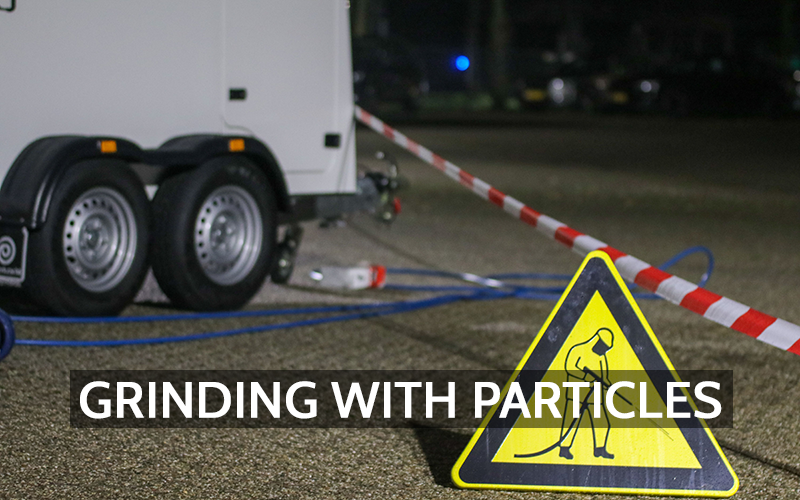
Abrasive blasting is used to remove paint, rust, corrosion, concrete, and other unwanted material from surfaces. The process can be found in shipyards, construction projects, restoration shops, bridge maintenance, fabrication plants, and many other industries.
The basic idea is simple: a stream of abrasive material is propelled at high speed against a surface. The air-quality problem is more complicated because the impact can break both the abrasive and the surface material into microscopic particles that become suspended in the air.
Blasting Turns Surfaces Into Dust
Abrasive blasting creates dust from at least two sources. The blasting material itself may break apart on impact, while paint, metal, concrete, rust, coatings, or other material removed from the surface can also become airborne.
This means the composition of blasting dust can change dramatically from one project to another. OSHA specifically notes that both the abrasive and the material being blasted must be considered when evaluating the potential health hazard because the resulting dust can contain respirable particles.
Sand Can Create a Silica Hazard
Traditional sandblasting can generate respirable crystalline silica when sand containing quartz is used as the abrasive. These particles are small enough to travel deep into the lungs, where repeated exposure can cause silicosis and contribute to lung cancer, chronic obstructive pulmonary disease, and kidney disease.
Many operations use alternative blasting materials instead of silica sand. Options can include materials such as steel shot, glass beads, aluminum oxide, slags, and other specialized abrasives, although every substitute has its own properties and potential hazards that still need to be evaluated.
The Surface Can Be More Dangerous Than the Abrasive
Replacing silica sand does not automatically make abrasive blasting harmless. A relatively low-hazard abrasive can still knock hazardous material from the surface being cleaned.
Old paint may contain lead or other metals, while industrial coatings can contain substances such as chromium or other toxic compounds. Blasting concrete creates mineral dust, and removing corrosion from metal structures can release mixtures of metal particles, coating residues, and abrasive fragments.
This is why understanding the history of the surface matters. A bridge, ship, building, or machine coated decades ago may produce very different blasting dust from a newly manufactured steel panel.
Containment Keeps Dust From Traveling
Outdoor blasting can produce large dust clouds if particles are allowed to escape freely. Contractors often use tarps, curtains, temporary walls, or full containment structures around the work area to keep debris from spreading to nearby workers, buildings, vehicles, soil, or neighborhoods.
More controlled enclosures can be maintained under negative pressure. Exhaust fans pull air into the enclosed work area and through a dust collection system, helping prevent contaminated air from escaping through seams and openings.
Containment can create another challenge because the dust is now concentrated inside a smaller space. Ventilation and respiratory protection become especially important when workers must enter the enclosure.
Dust Collectors Clean the Exhaust Air
Mechanical ventilation can pull dusty air away from blasting operations and send it through collection equipment before the air is discharged. Filters or other dust-control systems capture particles while maintaining airflow through the blasting area.
The effectiveness of these systems depends on proper sizing and maintenance. Loaded filters, blocked ducts, worn equipment, or poorly positioned exhaust points can reduce airflow and allow airborne dust concentrations to increase.
Dust collected by the system must also be handled carefully. Emptying collectors or changing filters can expose workers to concentrated material that contains everything captured during the blasting process.
Respirators Provide Another Layer of Protection
Abrasive blasting can generate extremely high concentrations of airborne particles close to the operator. OSHA requires appropriate respiratory protection for blasting operations when engineering controls alone cannot adequately control exposure.
Abrasive blasting respirators can supply clean breathing air while also protecting the worker’s head, neck, and face from rebounding abrasive. Respirators are still considered part of a larger control system rather than a replacement for containment, ventilation, safer materials, and good work practices.
Nearby workers may also require protection depending on where dust travels. Someone who is not holding the blasting nozzle can still be exposed while working inside or near the contaminated area.
Cleanup Can Create a Second Dust Cloud
Large amounts of spent abrasive and removed material may remain after blasting ends. If this debris is swept aggressively or disturbed with compressed air, fine particles can become airborne again.
Vacuum systems and other controlled cleaning methods can reduce this secondary exposure. Good housekeeping also prevents spent abrasive and contaminated dust from being carried outside the work zone on shoes, equipment, vehicles, and clothing.
Fugitive Dust Can Become a Community Issue
Abrasive blasting performed on bridges, buildings, ships, and other large structures may occur close to public areas. Poor containment can allow dust to travel beyond the project boundary, creating concerns about nearby homes, businesses, waterways, or pedestrians.
Wind makes outdoor control even more difficult because particles that escape containment can move far from the original source. Maintaining effective enclosures and controlling exhaust are therefore important not only for the blasting operator but also for preventing the worksite from becoming a source of surrounding air pollution.
Every Blasting Job Creates a Different Atmosphere
Abrasive blasting is unusual because its air pollution is partly created from whatever happens to be in front of the nozzle. Changing the abrasive, coating, substrate, containment system, or ventilation can completely change the mixture of particles in the air.
Effective control begins by understanding both sides of the process: what is being blasted at the surface and what is being blasted away from it. Containment, ventilation, dust collection, safer abrasive materials, respiratory protection, and careful cleanup can then work together to keep that temporary aerosol from spreading through the workplace and surrounding environment.