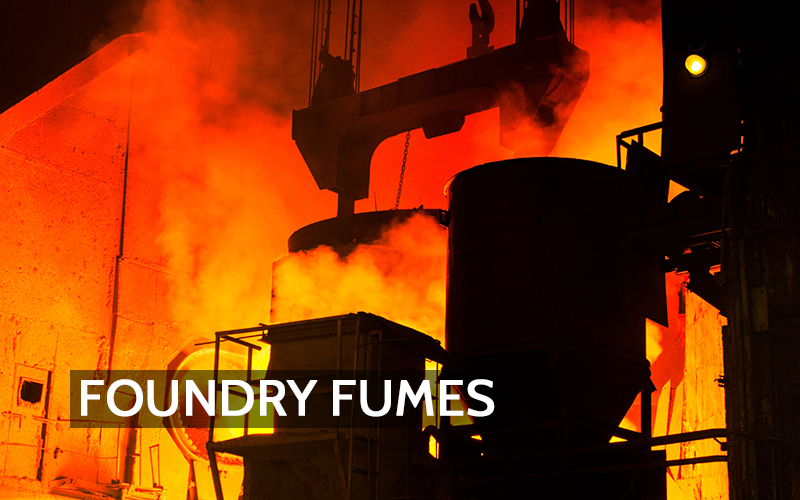
Metal foundries turn molten iron, steel, aluminum, and other metals into parts ranging from small machine components to enormous industrial castings. The process combines extreme heat with sand, binders, furnaces, grinding equipment, and heavy material handling. As a result, the air inside a foundry can contain several types of pollutants at different stages of production. Dust may dominate one area, while another may contain metal fumes, combustion gases, or chemicals released when hot metal contacts a mold.
Sand Molds Can Create Silica Dust
Many foundries form casting molds from sand because it can withstand the heat of molten metal and be shaped around complex patterns. Foundry sand may contain crystalline silica, which can become airborne when sand is mixed, transferred, handled, reclaimed, or disturbed after casting. The smallest respirable silica particles can travel deep into the lungs and repeated exposure can cause silicosis, an irreversible lung disease. NIOSH has documented silica exposure as an important occupational hazard in foundries, particularly during casting cleanup and other dusty operations.
Binders Add Chemistry to the Mold
Sand alone may not hold a complicated mold or core together, so foundries often mix it with chemical binders. These materials help the mold maintain its shape during pouring, but intense heat can break the binders down into gases and vapors. Depending on the materials used, decomposition products can include formaldehyde, hydrogen cyanide, isocyanates, phenols, and other organic compounds. The chemical mixture released during casting therefore depends partly on the specific sand and binder system used to make the mold.
Furnaces Create Heat and Combustion Products
Before casting begins, metal must be heated until it becomes liquid, which can require temperatures well above 1,000 degrees Celsius. Fuel-fired furnaces can produce carbon monoxide and other combustion gases, while electric furnaces avoid direct fuel combustion but still involve extremely hot metal and materials. Inadequate ventilation or poorly operating equipment can allow combustion products to accumulate in work areas. Foundries therefore need ventilation systems designed around the location and type of furnace rather than relying only on general building airflow.
Pouring Metal Changes the Atmosphere Quickly
When molten metal is poured into a mold, the temperature of the surrounding sand and binders rises almost instantly. Smoke, gases, and fine particles can be released as mold ingredients heat and decompose, while some metals and alloys can contribute fumes or metal-containing particulate matter. Depending on the metal being cast, airborne contaminants may include compounds containing manganese, chromium, nickel, lead, or other elements. Local exhaust ventilation positioned near pouring and cooling operations can help capture these emissions before they spread throughout the building.
Shakeout Releases What the Mold Was Holding
Once the casting has cooled enough to handle, the surrounding sand mold must be broken apart in a process known as shakeout. Mechanical vibration, impact, and movement can release large amounts of dust from sand that has been heated, fractured, and dried during casting. This stage can create substantial respirable silica exposure if the material is not contained and ventilated properly. NIOSH foundry studies have shown that exhaust ventilation near shakeout operations can help capture contaminated air close to where the dust is generated.
Cleaning the Casting Creates More Dust
A casting rarely emerges from its mold ready for use. Excess metal, attached channels, rough edges, sand residues, and surface defects may need to be removed through chipping, grinding, cutting, blasting, or other finishing operations. These processes can produce a mixture of metal particles, grinding dust, and silica left behind from the mold. NIOSH research has found that properly designed local exhaust systems, including downdraft workstations, can greatly reduce respirable dust during casting-cleaning operations.
Foundry Sand Can Be Used Again
Large foundries may recover and reuse molding sand rather than discarding it after each casting. Sand recovery systems separate metal and unwanted material before crushing, screening, cooling, and preparing the sand for another mold. These mechanical operations can create new opportunities for fine dust to become airborne, particularly at transfer points and processing equipment. Enclosures, dust collectors, local exhaust systems, and careful housekeeping can help keep reclaimed sand inside the production system instead of allowing it to spread throughout the building.
Ventilation Must Follow the Process
Foundries cannot rely on a single exhaust fan to control every contaminant because pollution sources are spread across many different operations. Furnace exhaust, pouring stations, shakeout equipment, grinding booths, and sand-handling systems may each require their own engineering controls. NIOSH studies have shown that local exhaust can substantially reduce exposure when contaminated air is captured close to the source. Air monitoring also helps facilities determine whether those controls are working because many of the smallest particles and gases cannot be judged by sight alone.
Air Quality Changes With the Casting
Foundries demonstrate how dramatically air quality can change during the production of a single object. A process may begin with silica-containing sand, move through chemical binders and furnace combustion, produce fumes during pouring, and finish with clouds of dust during shakeout and grinding. Controlling these hazards requires ventilation, dust collection, process enclosure, good housekeeping, equipment maintenance, and monitoring to work together. Understanding each stage allows foundries to control pollution where it originates instead of allowing multiple contaminants to mix throughout the workplace.
References
- NIOSH, Foundries: Control Technology Recommendations
- NIOSH, Controlling Silica Dust from Foundry Casting-Cleaning Operations
- NIOSH, Engineering Controls
- NIOSH, Safe Work Practices for Silica
- U.S. EPA, Iron and Steel Foundries: National Emission Standards for Hazardous Air Pollutants
- U.S. EPA, Iron and Steel Foundries: National Emission Standards for Area Sources