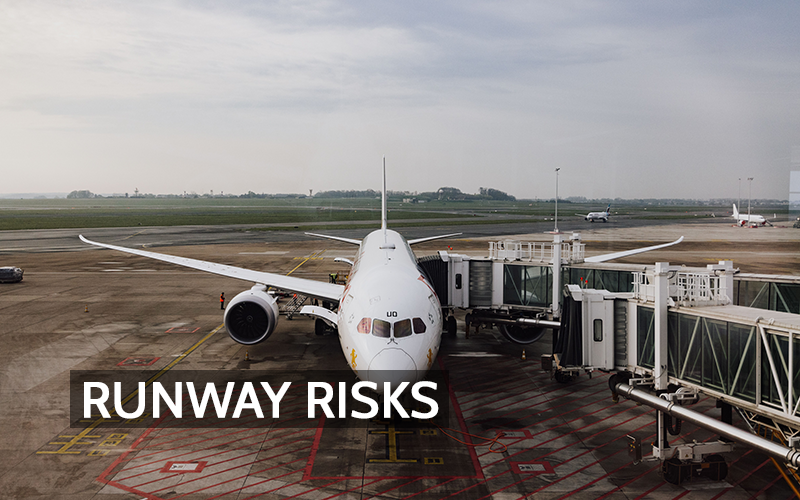
Airports may appear to have unlimited ventilation because so much work takes place outdoors, but the air around an aircraft can contain a complicated mixture of pollutants. Ramp workers, baggage handlers, mechanics, fuelers, catering crews, and other employees often work only a few feet from aircraft engines and ground equipment. Repeated exposure can occur throughout a shift as aircraft arrive, unload, refuel, reload, and depart.
The airport ramp is also a crowded workplace where pollution sources frequently operate close together. Jet engines, auxiliary power units, diesel vehicles, fuel trucks, and other equipment can all contribute emissions to the same relatively small area around a gate.
Jet Exhaust Creates a Complex Plume
Aircraft engines release more than the visible exhaust that can sometimes be seen behind a plane. Jet exhaust can contain nitrogen oxides, carbon monoxide, volatile organic compounds, soot, and extremely small particles known as ultrafine particles.
These pollutants are usually diluted as they move away from the aircraft, but ramp employees often work close to the source. Wind direction, engine power, aircraft position, and surrounding terminal buildings can determine whether an exhaust plume quickly disperses or passes directly through a work area.
Auxiliary Power Units Keep Emissions Close to the Gate
A parked aircraft still needs electricity and conditioned air after its main engines shut down. Many aircraft use an auxiliary power unit, or APU, which is a smaller onboard engine commonly located near the tail.
The APU allows lighting, ventilation, electronics, and other systems to operate while the aircraft is at the gate. Because it burns fuel, it also produces exhaust at the same time baggage handlers, catering workers, mechanics, and other employees may be working around the aircraft.
Electric ground power and preconditioned-air systems can reduce the need to operate APUs while aircraft are parked. The Federal Aviation Administration has supported gate electrification partly because reducing APU use can lower airport emissions.
Ground Equipment Adds Another Layer
An aircraft may be surrounded by baggage tractors, belt loaders, pushback tugs, buses, air-start units, catering trucks, and other ground support equipment. Traditional versions of these machines may use diesel or gasoline engines, adding exhaust to an area already affected by aircraft operations.
Diesel equipment can release fine particulate matter and nitrogen oxides, while gasoline-powered equipment can contribute carbon monoxide and other pollutants. Workers moving between several running vehicles may encounter overlapping exhaust plumes even though no single machine appears to dominate the area.
Electric ground support equipment can remove many of these tailpipe emissions from the ramp. Airports increasingly use electric baggage tractors, tugs, and other vehicles as charging infrastructure and equipment options expand.
Refueling Creates a Different Exposure
Fueling an aircraft introduces raw jet fuel rather than combustion exhaust. Workers involved in fuel handling can encounter vapors when fuel is transferred, while leaks or spills can create additional opportunities for inhalation and skin exposure.
Jet fuel contains a mixture of petroleum compounds that can evaporate into the surrounding air. NIOSH has investigated occupational jet-fuel exposure among aviation workers and emphasizes controlling both inhalation and direct contact during fuel-handling and maintenance operations.
Weather can influence these exposures because fuel generally evaporates more readily under warmer conditions. This means the atmosphere around fueling operations may change with temperature, wind, equipment design, and the specific task being performed.
Winter Brings Deicing Operations
Cold-weather airports introduce another process directly onto the ramp. Aircraft may be sprayed with heated deicing and anti-icing fluids before departure to remove or prevent dangerous ice accumulation.
Spraying creates droplets that can drift away from the aircraft, particularly under windy conditions. Workers performing or standing near deicing operations therefore have a different exposure environment from employees working the same ramp during warmer months.
Deicing fluids are very different from jet exhaust, but their use demonstrates how quickly airport air can change with the season. A worker’s breathing environment may depend as much on weather and current operations as on the airport itself.
Outdoor Air Does Not Guarantee Dilution
An open ramp provides much more natural air movement than an enclosed maintenance shop, but outdoor work does not automatically eliminate exposure. Someone standing close to an engine exhaust, APU, diesel vehicle, or fueling operation can breathe pollutants before they have enough distance to disperse.
Airport architecture can also influence air movement. Terminals, jet bridges, hangars, parked aircraft, and other large structures can redirect wind and create areas where emissions behave differently from those over an open field.
Worker location is therefore important when evaluating airport air quality. Measurements taken far from a gate may not represent what someone experiences while loading luggage beside an operating APU or working behind a service vehicle.
Cleaner Ground Operations Can Reduce Exposure
Airports have several ways to reduce pollution without changing the fundamental job of moving aircraft and passengers. Electric ground equipment, gate power, preconditioned air, reduced vehicle idling, cleaner engines, careful equipment placement, and good maintenance can all reduce emissions close to workers.
The FAA’s Voluntary Airport Low Emissions program has supported projects such as low-emission vehicles, charging infrastructure, and gate electrification. These technologies can improve local air quality by replacing combustion sources directly on airport property rather than relying only on pollution controls farther away.
Air monitoring can also help identify where exposures are highest. Because many important airport pollutants are invisible, simply looking across the ramp cannot show whether a worker is standing inside a concentrated exhaust plume.
The Air Between Flights
Ground crews perform much of the work that allows air travel to function, often within a few feet of running machinery and aircraft. Jet exhaust, APUs, service vehicles, fuel handling, and seasonal operations can create a changing mixture of gases, particles, and vapors throughout the workday.
Improving airport air quality therefore involves more than controlling emissions from aircraft in flight. Reducing pollution at the gate, electrifying equipment, limiting unnecessary engine operation, and understanding where workers actually spend their time can make the air between flights an important part of airport occupational health.