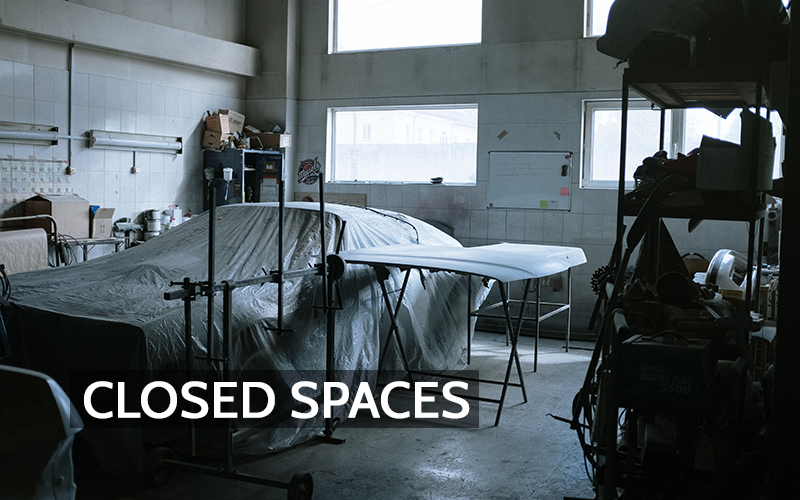
An automotive repair shop is a complex workplace. Engines are tested, brakes are replaced, metal is cut and welded, paints are applied, batteries are charged, and chemical products are used throughout the day. While customers often see mechanics changing oil or replacing tires, they rarely see the wide range of airborne contaminants that technicians encounter while performing these tasks.
Modern automotive facilities are much cleaner than those of previous decades, but auto repair remains an occupation that requires careful attention to ventilation, chemical handling, and worker protection. The challenge is that no single pollutant dominates the environment. Instead, mechanics may be exposed to a changing mixture of exhaust, metal particles, solvents, dust, and chemical vapors depending on the work being performed.
Understanding those hazards is the first step toward controlling them.
Vehicle Exhaust Is Still One of the Largest Concerns
Even though newer vehicles produce fewer emissions than older models, internal combustion engines remain a major source of air pollution inside repair facilities.
Automobiles are frequently started during diagnostic procedures, emissions testing, repairs, and final inspections. Without proper ventilation, exhaust can quickly accumulate inside an enclosed workspace.
Carbon monoxide remains one of the most important concerns. The gas is colorless and odorless and can cause headaches, dizziness, nausea, confusion, and fatigue. Higher concentrations can interfere with the blood’s ability to carry oxygen and may become life-threatening.
Nitrogen oxides, volatile organic compounds, and particulate matter are also present in vehicle exhaust. Diesel-powered vehicles create an additional challenge because diesel exhaust contains extremely small particles that can remain suspended in the air for extended periods.
Modern repair facilities often use flexible tailpipe exhaust extraction systems that connect directly to a vehicle and remove emissions before they enter the workplace.
Brake Dust Contains More Than Dirt
Replacing brake components creates another significant exposure pathway.
Historically, asbestos was commonly used in brake linings because of its heat resistance and durability. Although asbestos use has declined dramatically, technicians may still encounter older vehicles or aftermarket components that require caution.
Modern brake dust typically contains a mixture of iron, copper, zinc, graphite, and other materials generated through friction and wear.
Compressed air should never be used to clean brake assemblies because it can disperse fine particles throughout the shop. Instead, technicians often use specialized brake-cleaning equipment, low-pressure cleaning methods, or HEPA-filtered vacuum systems designed to capture dust before it becomes airborne.
The process may appear routine, but each brake job can release a complex mixture of particles into the work environment.
Welding and Cutting Create Metal Fumes
Many automotive repair facilities perform fabrication, exhaust repair, frame straightening, or body work that requires welding.
Welding fumes are produced when metal is heated to extremely high temperatures. The resulting particles are often much smaller than ordinary dust and can penetrate deeply into the respiratory system.
The composition of the fumes depends on the materials being joined. Iron, manganese, chromium, nickel, aluminum, and zinc are only a few of the metals that may be present.
Grinding operations create another source of airborne particles. Although grinding generally produces larger particles than welding, those particles may still contain metals and other potentially hazardous materials.
Local exhaust ventilation is often the preferred engineering control because it captures contaminants close to their source rather than attempting to dilute them after they have spread throughout the building.
Paint and Solvents Release Volatile Organic Compounds
Automotive body shops introduce another group of airborne contaminants: volatile organic compounds, or VOCs.
Paints, primers, clear coats, adhesives, degreasers, cleaning products, and solvents may all release vapors during application and drying.
Some paint systems also contain isocyanates, which are used in many polyurethane products. These compounds require particular attention because they can cause respiratory irritation and contribute to occupational asthma.
Modern spray booths are designed to address these hazards through controlled airflow and filtration. Air enters the booth in a predictable pattern, carries overspray away from the technician, and passes through filtration systems before being exhausted.
Protective equipment may include gloves, eye protection, coveralls, and respirators selected specifically for the products being used.
Batteries Introduce Chemical and Electrical Hazards
Battery service is becoming increasingly important as hybrid and electric vehicles become more common.
Traditional lead-acid batteries can release hydrogen gas during charging. Hydrogen is highly flammable and can accumulate in poorly ventilated spaces.
Battery maintenance may also involve exposure to sulfuric acid and corrosive residues.
Electric vehicles introduce additional considerations because technicians may encounter high-voltage systems, thermal-management components, and specialized battery technologies that require additional training.
Although electric vehicles eliminate many tailpipe emissions inside the shop, they do not eliminate every air-quality concern associated with vehicle repair.
Oil, Fuel, and Cleaning Chemicals Affect Indoor Air
Routine maintenance procedures can also influence indoor air quality.
Gasoline, diesel fuel, transmission fluid, brake cleaner, engine degreasers, and aerosol products may release vapors during normal use. Spills that are not cleaned promptly can continue releasing chemicals into the workspace.
Proper storage becomes an important control strategy. Sealed containers, designated storage cabinets, spill-control procedures, and chemical inventories reduce unnecessary exposures.
Many facilities also rely on safety data sheets to identify chemical hazards, understand ventilation requirements, and select appropriate protective equipment.
The Hierarchy of Controls Guides Protection
Auto repair facilities generally rely on several layers of protection rather than a single solution.
Engineering controls often provide the greatest benefit. Tailpipe extraction systems, spray booths, local exhaust ventilation, enclosed chemical storage, and general building ventilation reduce airborne contamination before workers encounter it.
Administrative controls provide another layer. Training programs, standard operating procedures, equipment maintenance schedules, and housekeeping practices all influence exposure.
Personal protective equipment serves as the final barrier when hazards cannot be eliminated through other means.
Regular cleaning also matters. Dust allowed to accumulate on work surfaces may be disturbed and become airborne again. HEPA-filtered vacuums and wet-cleaning methods are often preferred over dry sweeping or compressed air.
Air Quality Is Part of Modern Automotive Safety
Automotive repair has evolved dramatically over the past several decades. Computer diagnostics, emissions controls, hybrid systems, and electric vehicles have changed the tools mechanics use and the hazards they encounter.
Yet the basic principle remains unchanged: many common repair procedures create airborne contaminants.
Fortunately, the same industry that designs sophisticated vehicles has also developed sophisticated ways to protect the people who repair them. Exhaust extraction, controlled ventilation, filtration, specialized cleaning techniques, and carefully selected protective equipment allow technicians to perform complex repairs while reducing unnecessary exposure.
For customers, a repair shop may seem like a place where problems under the hood are fixed. For the people who work there, maintaining clean air is one of the most important repairs taking place every day.
References
- https://www.osha.gov/auto-repair
- https://www.osha.gov/chemical-hazards
- https://www.osha.gov/welding-cutting-brazing
- https://www.osha.gov/motor-vehicle-safety
- https://www.osha.gov/publications/osha3404
- https://www.cdc.gov/niosh/topics/asbestos/default.html
- https://www.cdc.gov/niosh/topics/welding/default.html
- https://www.cdc.gov/niosh/topics/isocyanates/default.html
- https://www.epa.gov/indoor-air-quality-iaq/volatile-organic-compounds-impact-indoor-air-quality
- https://www.epa.gov/asbestos/brake-and-clutch-repair-work
- https://www.aiha.org/public-resources/consumer-resources/occupational-health-and-safety-issues-in-the-automotive-industry