When people think about the health effects of air pollution, the lungs usually come first. Fine particles, ozone, smoke, and traffic pollution are closely associated with respiratory and cardiovascular health.
The mouth receives much less attention.
Yet the oral cavity is one of the body’s most direct points of contact with the outside environment. Every day, air moves across the tongue, teeth, gums, and other oral tissues thousands of times. Researchers are now investigating whether pollutants carried in that air may influence inflammation in the tissues supporting our teeth.
Early evidence suggests that poor air quality may be another environmental factor capable of affecting periodontal, or gum, health.
What Happens During Gum Disease?
Healthy gums form a protective seal around the teeth.
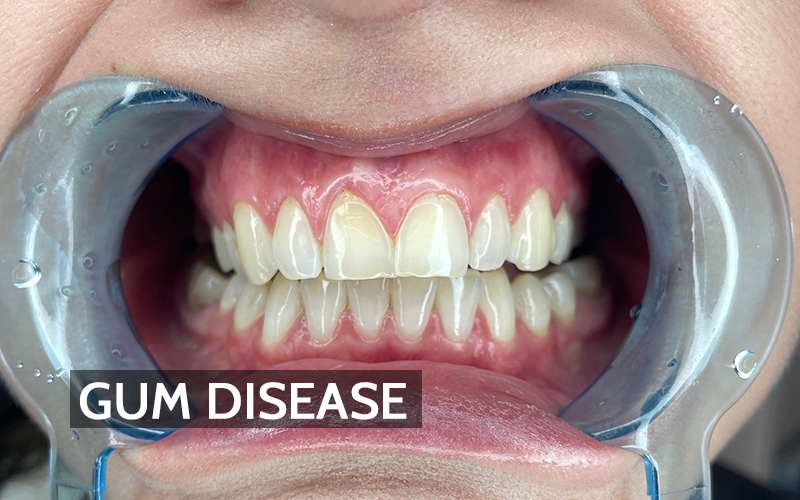
The mouth naturally contains large communities of bacteria. When bacterial plaque accumulates around the gumline, the immune system responds with inflammation. The mildest form of periodontal disease, gingivitis, can cause red, swollen, or bleeding gums.
Periodontitis is more severe.
Persistent inflammation can damage the periodontal ligament and alveolar bone that hold teeth in place. Over time, pockets can form between the gums and teeth, allowing additional bacteria to colonize areas that are difficult to clean.
Periodontal disease is primarily associated with dental plaque and is influenced by factors including smoking, diabetes, genetics, age, and oral hygiene.
Air pollution is not considered a replacement for those established causes and risk factors. Instead, researchers are asking whether pollution can place additional inflammatory stress on already vulnerable tissues.
The Mouth Is Directly Exposed to Outdoor Air
Fine particulate matter, or PM2.5, consists of particles with diameters of 2.5 micrometers or smaller.
These particles can come from vehicle exhaust, wildfire smoke, combustion, industrial activity, and atmospheric chemical reactions. Their small size allows them to travel deep into the respiratory system.
Some inhaled material also encounters the mouth.
Particles may deposit on oral surfaces or become mixed with saliva. Mouth breathing, physical activity, and exposure to heavily polluted environments can potentially increase the amount of outside air moving directly across oral tissues.
The gums and tongue are covered by epithelial cells that form a barrier between the external environment and underlying tissue. Researchers have found that PM2.5 can affect oral epithelial cells and gingival fibroblasts—the connective-tissue cells that help maintain and repair gum tissue.
That provides one possible pathway for air pollution to influence periodontal health directly.
Fine Particles Can Promote Oxidative Stress
One of the most important biological effects associated with particulate pollution is oxidative stress.
Normal cells continuously produce and control reactive molecules known as reactive oxygen species. When pollutant exposure produces more of these molecules than the body’s antioxidant systems can manage, cellular structures can become damaged.
Oxidative stress can also activate inflammatory responses.
A 2026 study examining human gingival fibroblasts found that PM2.5 exposure disrupted mitochondrial function, increased inflammation, and damaged cellular processes involved in maintaining gum tissue.
Another 2026 experiment exposed mice to urban PM2.5 collected in São Paulo, Brazil. Researchers observed inflammatory and structural changes in periodontal and tongue tissues. The effects were particularly pronounced when periodontal inflammation was already present.
The animals exposed to both particulate pollution and experimental periodontitis experienced greater periodontal tissue damage and bone loss than animals exposed to either condition alone.
That finding supports an important possibility: pollution may be more effective at worsening an existing inflammatory condition than independently creating gum disease from nothing.
The Lungs May Influence the Gums Too
Pollutants do not necessarily have to land directly on the gums to affect them.
When PM2.5 enters the lungs, it can trigger inflammatory and oxidative responses throughout the body. Chemical signals produced during that response can enter circulation and influence tissues far from the respiratory system.
The gums contain an extensive network of small blood vessels and are already involved in constant interactions between oral bacteria and the immune system.
Systemic inflammation caused by pollution could therefore add another source of stress to periodontal tissues.
This possible connection reflects a broader lesson emerging from air-pollution research. The effects of inhaled particles are not limited to wherever those particles initially land. Responses beginning in the lungs can influence the cardiovascular system and other organs through circulating inflammatory signals.
The mouth may be another participant in that system.
Human Studies Suggest a Connection, but Questions Remain
Population studies have begun examining whether people living with greater air-pollution exposure experience more periodontal disease.
A large study using nationally representative data from China reported that long-term PM2.5 exposure was associated with increased periodontitis risk. Other research has linked short-term exposure to PM2.5, PM10, sulfur dioxide, or nitrogen dioxide with measures of gingivitis or periodontal health.
A 2024 systematic review found evidence suggesting connections between several air pollutants and oral disease, particularly periodontitis.
However, the research is not unanimous.
A study involving more than 9,000 Colombian adults, for example, found no association between municipality-level PM2.5 exposure and severe periodontitis.
These differences matter.
Periodontal disease develops over many years and is influenced by smoking, dental care, income, diet, diabetes, age, genetics, occupation, and many other factors. Accurately separating the effect of air pollution from all of those influences is difficult.
Researchers therefore still need long-term studies with detailed personal exposure measurements and careful control of other periodontal risk factors.
Gaseous Pollution May Matter as Well
Particles are receiving much of the research attention, but they are not the only pollutants that contact oral tissues.
Nitrogen dioxide, ozone, sulfur dioxide, and other reactive gases can interact with moist biological surfaces. Some epidemiological studies have reported associations between gaseous pollutants and periodontal outcomes.
The biological mechanisms are less well established than those being investigated for particulate matter.
Air pollution also exists as a mixture rather than as isolated chemicals. Someone near a busy roadway may simultaneously encounter PM2.5, nitrogen oxides, volatile organic compounds, and other combustion products.
Understanding how those mixtures interact with oral tissues will likely become an important area of future research.
The Mouth Is Part of the Environmental Interface
Dentistry and air-quality science may seem like unrelated fields, but the connection becomes less surprising when the mouth is viewed as part of the body’s environmental boundary.
The gums contain living tissue, blood vessels, immune cells, connective tissue, and a complex community of microorganisms. They are also repeatedly exposed to whatever enters the mouth from food, water, and air.
Current evidence does not suggest that air pollution should be considered a primary cause of periodontal disease. Dental plaque and well-established individual risk factors remain central to how gum disease develops.
Instead, the emerging research suggests something more subtle.
Poor air quality may create additional oxidative and inflammatory stress that makes periodontal tissues less resilient—particularly when inflammation is already present.
Air pollution is usually discussed in terms of what happens after a pollutant reaches the lungs. Research into gum health reminds us that the body’s interaction with the atmosphere actually begins several inches earlier, the moment polluted air enters the mouth.
References
- https://link.springer.com/article/10.1007/s11869-026-02014-4
- https://pubmed.ncbi.nlm.nih.gov/41702313/
- https://pubmed.ncbi.nlm.nih.gov/39750520/
- https://pubmed.ncbi.nlm.nih.gov/38268133/
- https://pubmed.ncbi.nlm.nih.gov/39165084/
- https://pubmed.ncbi.nlm.nih.gov/39555982/
- https://pubmed.ncbi.nlm.nih.gov/39057002/
- https://pubmed.ncbi.nlm.nih.gov/25302445/
- https://www.cdc.gov/oral-health/about/gum-periodontal-disease.html
- https://www.nidcr.nih.gov/health-info/gum-disease
- https://www.epa.gov/pm-pollution/health-and-environmental-effects-particulate-matter-pm