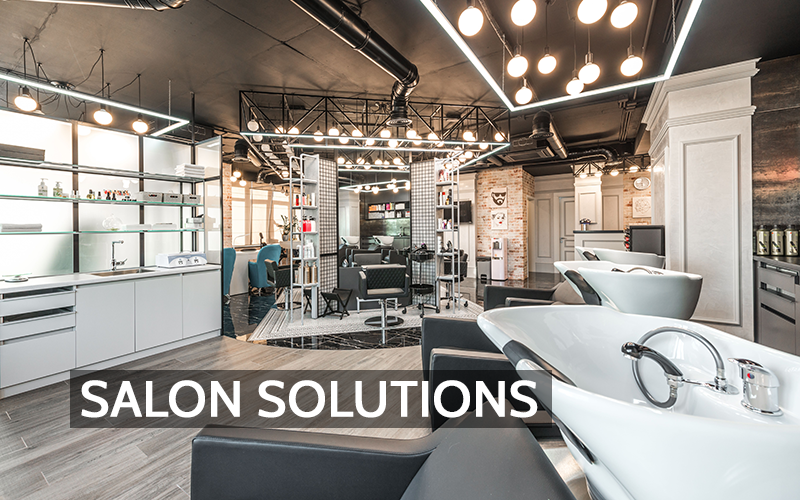
Hair salons, nail salons, barbershops, and other beauty businesses may not look like industrial workplaces, but chemically they can be surprisingly complicated indoor environments.
Throughout a normal day, employees may open bottles of solvents, mix hair color and bleach, spray styling products, file artificial nails, apply adhesives, disinfect tools, and heat chemical treatments.
Many of these activities release gases, vapors, droplets, or particles into the surrounding air.
For a customer spending an hour inside, exposure is generally brief. For stylists and technicians working eight hours a day, controlling that indoor environment becomes an important occupational air-quality issue.
Nail Salons Combine Vapors and Dust
The distinctive smell of many nail salons comes largely from volatile chemicals evaporating from nail products.
Acetone, ethyl acetate, methacrylate compounds, toluene, formaldehyde-related ingredients, and other chemicals may be present depending on the products and services being used.
Artificial nails present another challenge.
Acrylic and similar systems involve reactive chemicals during application, while filing and shaping hardened artificial nails can create fine dust. Electric nail drills can generate particles directly beneath the technician’s face.
This means a nail technician may encounter both chemical vapors and particulate matter at the same workstation.
Simply filtering room air may not be enough. One of the most effective strategies is local exhaust ventilation that captures contaminants close to the client’s hands before they spread throughout the salon.
Downdraft manicure tables are one example.
Hair Salons Have Different Chemical Sources
Hair salons generally generate less filing dust but use a wider variety of liquids, powders, sprays, and heated treatments.
Hair dyes, bleaching products, shampoos, disinfectants, styling sprays, adhesives, and straightening products can all contribute to the indoor chemical mixture.
Bleaching powders deserve particular attention because mixing and handling powdered products can release airborne material. Persulfate compounds used in some bleaching products are recognized occupational respiratory sensitizers.
Hairsprays and other aerosol products intentionally create small droplets that remain suspended long enough to reach the hair.
They can also enter the breathing zone of the stylist and nearby customers.
One application may create only a brief plume. Dozens of applications throughout a busy day can produce a very different workplace environment.
Heat Can Change What a Product Releases
Some salon processes become more important from an air-quality standpoint when heat is applied.
Certain hair-smoothing and straightening products can contain formaldehyde, formalin, methylene glycol, or ingredients capable of releasing formaldehyde during treatment.
After the product is applied, blow dryers and flat irons heat the hair.
That heating can release formaldehyde gas into the surrounding air.
This is why occupational regulators have paid particular attention to some keratin and smoothing treatments. OSHA has previously measured formaldehyde concentrations above occupational limits during certain salon treatments.
The lesson extends beyond one particular product.
Chemical exposure depends not only on what is inside a bottle but also on what happens to the product after it is applied. Heating, spraying, mixing, grinding, or curing can change how readily ingredients enter the air.
Fragrance Is Part of the Indoor Chemical Mixture
Beauty facilities also use large quantities of fragranced products.
Shampoos, conditioners, perfumes, sprays, lotions, cleaning products, and air fresheners can all release volatile organic compounds, or VOCs.
A pleasant smell does not automatically indicate that something is harmful, and an unpleasant odor does not necessarily mean concentrations are dangerous.
Odor is therefore a poor air-quality instrument.
Some VOCs can also undergo reactions after entering indoor air. Fragrance ingredients and cleaning chemicals may react with other compounds, including ozone that enters from outdoors, potentially forming additional particles or chemical byproducts.
The atmosphere inside a salon is consequently a changing chemical mixture rather than simply a collection of individual product smells.
Cleaning Can Affect Air Quality Too
Sanitation is essential in personal-care businesses.
Chairs, work surfaces, floors, sinks, tools, and shared equipment require regular cleaning and disinfection.
Those activities introduce additional chemicals.
Spray disinfectants can create droplets, while some cleaning agents release VOCs. Mixing incompatible cleaning chemicals can create much more serious hazards and should never be done unless specifically instructed by the manufacturer.
Good salon air-quality management therefore has to consider both the services provided to customers and the products used to clean up afterward.
Ventilation Is the Main Line of Defense
Opening the front door occasionally is not a substitute for properly designed ventilation.
General HVAC systems dilute contaminants by bringing in outdoor air and filtering or exhausting indoor air.
Local exhaust goes one step further.
Instead of allowing a chemical vapor or cloud of nail dust to spread throughout the building, a local system captures it close to the source.
Ventilated nail tables, extraction arms, and other capture systems can substantially reduce worker exposure when properly designed and maintained.
Product containers should also remain closed when they are not being used. Waste containing solvent-soaked wipes or cotton should be covered rather than allowed to evaporate into the room.
Source control is almost always easier than trying to clean contaminated air afterward.
Workers Face the Greatest Cumulative Exposure
Customers should certainly be considered when managing salon air, but employees generally experience the greatest cumulative exposure.
A client may receive a manicure once every few weeks.
A nail technician might perform ten in one day.
Similarly, a customer may experience one hair-color treatment while a stylist stands near dyes, bleaches, sprays, and smoothing chemicals throughout the week.
Occupational exposure therefore depends on concentration, duration, frequency, and the combination of products being used.
Safety Data Sheets, product labels, appropriate gloves, ventilation, employee training, and substitution of lower-emission products can all play a role in reducing exposure.
A Small Workplace With Complicated Air
Beauty shops illustrate an important principle of indoor air quality: a building does not have to contain smokestacks or heavy machinery to have meaningful airborne exposures.
A small salon may contain solvents, reactive chemicals, powders, aerosols, fragrances, disinfectants, and heated products all operating within a few hundred square feet.
Good air quality does not require eliminating every smell or chemical from the room.
It requires understanding where pollutants originate, controlling them as close to the source as possible, and providing enough ventilation to prevent everyday salon activities from becoming an everyday breathing-zone exposure.
References
- https://www.cdc.gov/niosh/nail-technicians/
- https://www.cdc.gov/niosh/docs/99-112/default.html
- https://www.cdc.gov/niosh/asthma/hcp/exposures/index.html
- https://www.osha.gov/nail-salons/chemical-hazards
- https://www.osha.gov/hair-salons/
- https://www.osha.gov/hair-salons/worker-health
- https://www.fda.gov/cosmetics/cosmetic-products/nail-care-products
- https://www.fda.gov/cosmetics/cosmetic-products/hair-smoothing-products-release-formaldehyde-when-heated
- https://www.fda.gov/cosmetics/industry/salon-professionals-fact-sheet
- https://www.epa.gov/indoor-air-quality-iaq/volatile-organic-compounds-impact-indoor-air-quality
- https://www.epa.gov/indoor-air-quality-iaq/sources-indoor-particulate-matter-pm