Commercial aviation connects cities, supports trade, and allows people and goods to travel across continents within hours. That mobility requires large amounts of fuel, however, and aircraft engines release gases and particles both near airports and high in the atmosphere.
Airlines do not control every source of airport pollution. Airports, fuel suppliers, ground-handling companies, air traffic controllers, manufacturers, and passengers traveling to terminals all contribute. Airlines nevertheless influence air quality through the aircraft they purchase, the fuel they use, their maintenance programs, and the way they plan and operate flights.
What Do Aircraft Engines Release?
Most commercial aircraft burn kerosene-based jet fuel. During efficient combustion, the main products are carbon dioxide and water vapor. Engines also produce nitrogen oxides, carbon monoxide, hydrocarbons, sulfur compounds, and particulate matter.
Nitrogen oxides contribute to the formation of ground-level ozone and secondary particle pollution. Carbon monoxide and unburned hydrocarbons are more likely when engines operate inefficiently, particularly at low power. Aircraft particles include soot and extremely small nonvolatile particles created during combustion.
The amount and type of pollution change during different stages of a flight. Taxiing and idling occur close to workers and surrounding communities. Takeoff uses high engine power and produces substantial nitrogen oxide emissions. Cruise emissions are released far above the ground, where they influence atmospheric chemistry and climate rather than immediate neighborhood air quality.
Water vapor released at high altitude can sometimes contribute to contrails. These are primarily a climate concern rather than conventional local air pollution, but they demonstrate that the environmental effects of flying extend beyond the airport boundary.
Airports Contain Many Pollution Sources
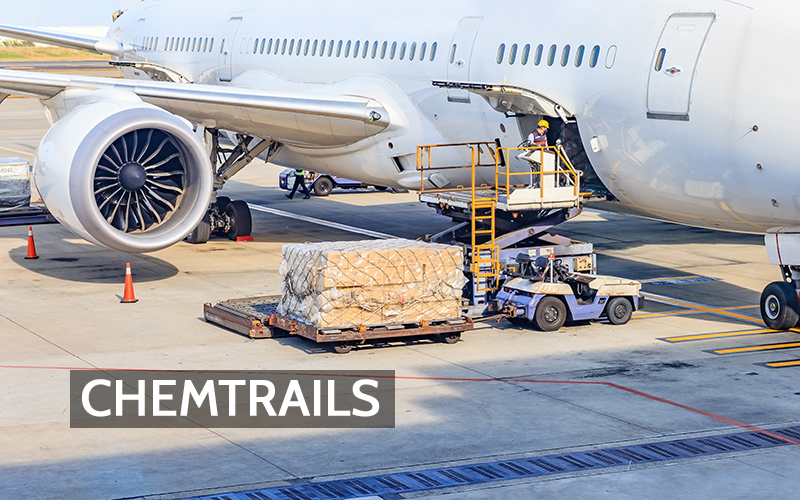
Aircraft engines are only one part of an airport’s emission inventory. Auxiliary power units, or APUs, are small turbine engines that provide electricity and air conditioning while an aircraft is parked. Baggage tractors, catering trucks, fuel vehicles, buses, deicing equipment, emergency generators, boilers, fuel-storage systems, and passenger vehicles also affect local air.
Busy roadways and parking facilities can be major contributors, particularly at airports located within heavily populated urban areas. Construction, runway maintenance, and disturbed soil may create additional dust.
Air-quality planning must therefore consider the airport as a complete transportation and industrial system rather than focusing only on airplanes.
Purchasing More Efficient Aircraft
One of the most effective actions available to an airline is replacing older aircraft with newer, more fuel-efficient models. Modern airplanes may use lighter materials, improved aerodynamics, more efficient engines, and advanced flight-control systems.
Burning less fuel usually means producing less carbon dioxide and fewer combustion emissions for the same trip. New engines must also meet applicable certification standards for pollutants such as nitrogen oxides, carbon monoxide, hydrocarbons, smoke, and nonvolatile particulate matter.
Fleet replacement takes time because commercial aircraft are expensive and may remain in service for decades. Airlines may improve existing planes by installing winglets, updating engines, reducing unnecessary interior weight, or improving maintenance between major purchases.
Reducing Fuel Use During Each Flight
Operational changes can lower emissions without requiring an entirely new aircraft. Airlines use flight-planning software to select routes, altitudes, and speeds that account for weather, winds, congestion, and fuel requirements.
Pilots may use continuous climbs and descents when air traffic conditions allow. These procedures reduce periods of level flight that require additional thrust. Improved coordination with air traffic control can also reduce holding patterns, unnecessary rerouting, and time spent waiting with engines running.
Airlines carefully manage aircraft weight because carrying additional mass requires more fuel. Removing unnecessary equipment, using lighter seats and service carts, improving cargo planning, and carrying an appropriate amount of water can create small savings across thousands of flights.
Some airlines use single-engine taxi procedures when safe and practical. An aircraft may shut down one engine after landing or delay starting all engines before departure. These practices reduce fuel use and emissions close to the terminal.
Cleaning Up Operations at the Gate
Aircraft parked at a gate still need electricity, lighting, ventilation, and temperature control. Running the APU provides these services but releases exhaust near ground workers and terminal buildings.
Airports and airlines can instead connect aircraft to ground electrical power and preconditioned air. These systems allow the APU to be shut down while keeping the cabin powered and comfortable.
Electric baggage tractors, belt loaders, passenger buses, and other ground-support vehicles can further reduce local nitrogen oxide, carbon monoxide, and particle emissions. Where electrification is not yet practical, newer engines, cleaner fuels, idle-reduction policies, and regular maintenance can help.
Using Sustainable Aviation Fuel
Sustainable aviation fuel, commonly called SAF, can be produced from materials such as used cooking oil, agricultural residues, waste, or other non-petroleum feedstocks. Approved SAF is blended and handled so it can be used within existing aircraft and fuel infrastructure.
SAF is mainly promoted for reducing lifecycle greenhouse gas emissions. Its effect depends on how the feedstock is produced, processed, transported, and converted into fuel.
Some forms may also contain less sulfur and fewer aromatic compounds than conventional jet fuel, potentially reducing soot and sulfur-related particles. SAF does not eliminate all aircraft pollution, however. Burning it still produces carbon dioxide, nitrogen oxides, and other combustion products.
Cost, limited supply, feedstock availability, and production capacity currently restrict widespread use.
Who Regulates Airline Emissions?
The International Civil Aviation Organization, or ICAO, develops global environmental standards for international aviation. Its Annex 16 includes standards covering aircraft-engine emissions and airplane carbon dioxide performance. ICAO also oversees CORSIA, a system requiring participating aircraft operators to monitor and report carbon dioxide emissions from covered international flights and address qualifying emissions through approved measures.
In the United States, the Environmental Protection Agency establishes aircraft and aircraft-engine emission standards under the Clean Air Act. The Federal Aviation Administration develops and administers the certification procedures used to demonstrate that aircraft and engines comply with those standards.
The FAA also evaluates air quality during certain airport developments and federal actions. The Clean Air Act and National Environmental Policy Act may require emission inventories, air-quality modeling, public review, and measures to reduce environmental impacts.
State and local environmental agencies regulate many airport sources that are not aircraft engines, including boilers, generators, fuel systems, construction dust, and some ground vehicles. Airport authorities may establish additional idling rules, electric-vehicle programs, monitoring networks, or operating procedures.
Airlines cannot eliminate the effect of aviation through one technology. Cleaner aircraft, efficient flight planning, sustainable fuels, reduced APU use, electrified ground equipment, strong maintenance, and coordinated regulation all contribute. The greatest progress occurs when the entire aviation system works together—from the engine manufacturer and flight crew to the airport, regulator, and air traffic controller.
References
- https://www.epa.gov/regulations-emissions-vehicles-and-engines/regulations-emissions-aircraft
- https://www.epa.gov/regulations-emissions-vehicles-and-engines/regulations-emissions-aircraft-engines
- https://www.epa.gov/regulations-emissions-vehicles-and-engines/regulations-greenhouse-gas-emissions-aircraft
- https://www.epa.gov/regulations-emissions-vehicles-and-engines/epa-collaboration-international-air-pollution-standards
- https://www.faa.gov/about/office_org/headquarters_offices/apl/aee/emissions/certification
- https://www.faa.gov/regulations_policies/policy_guidance/envir_policy/airquality_handbook
- https://www.faa.gov/airports/environmental/air_quality
- https://www.faa.gov/about/office_org/headquarters_offices/apl/aee/energy
- https://www.faa.gov/about/office_org/headquarters_offices/apl/aee/corsia
- https://www.icao.int/environmental-protection/LAQ
- https://www.icao.int/environmental-protection/operational-measures
- https://www.icao.int/environmental-protection/technology-goals-and-standards
- https://www.icao.int/CORSIA