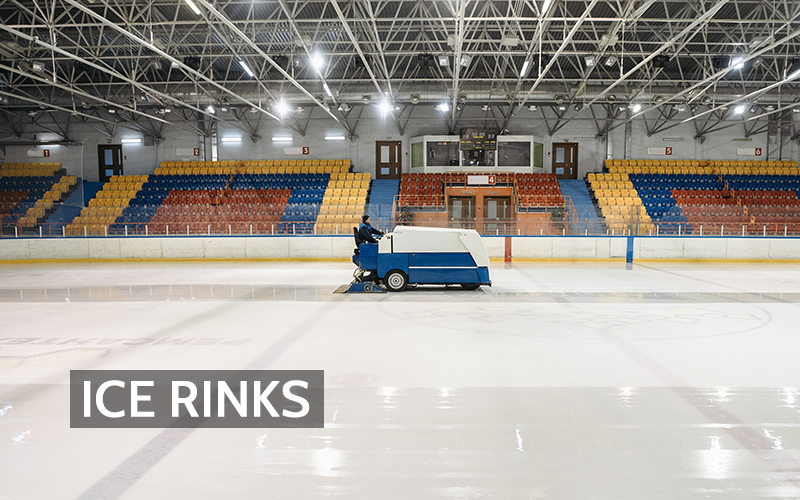
Indoor ice rinks create an unusual environment where a frozen surface sits inside a large occupied building. Hockey players, figure skaters, coaches, employees, and spectators may spend hours inside these facilities, often assuming that the large open space provides plenty of fresh air. However, combustion equipment used to maintain the ice can release pollutants that accumulate indoors when ventilation is inadequate.
The greatest concerns have traditionally come from fuel-powered ice resurfacers and edgers. These machines can release carbon monoxide, nitrogen dioxide, particulate matter, and other combustion pollutants directly into the arena while maintaining the ice.
The Ice Resurfacer Can Be a Major Pollution Source
Ice resurfacers repeatedly travel across the rink to shave the ice, collect snow, add water, and create a smooth new surface. Machines powered by propane, natural gas, gasoline, or diesel burn fuel while operating inside the building, allowing their exhaust to enter the same air breathed by skaters and spectators.
Carbon monoxide, or CO, is one of the major concerns because it is colorless and odorless. Exposure can cause headache, dizziness, nausea, weakness, confusion, and, at sufficiently high concentrations, serious poisoning.
Nitrogen dioxide, or NO₂, is another important combustion pollutant produced by some resurfacing equipment. It irritates the respiratory system and can cause coughing, shortness of breath, chest discomfort, and worsening of asthma or other respiratory conditions.
Cold Air Can Keep Pollution Near the Ice
Ice arenas are designed to keep the rink surface cold while maintaining more comfortable temperatures elsewhere in the building. This temperature difference can create layers of air that do not mix as freely as they would outdoors.
Nitrogen dioxide is also denser than air, which can contribute to higher concentrations near the ice under some conditions. The boards and protective glass surrounding a hockey rink can further interfere with normal air circulation between the ice surface and the rest of the arena.
This creates a particular concern for athletes because they spend long periods close to the ice while breathing rapidly during physical activity. A spectator sitting farther away may therefore experience a different exposure from a hockey player skating near the rink surface.
Real Incidents Have Shown the Risk
The risks are not merely theoretical. In 2011, health officials investigated an indoor ice arena in New Hampshire after hockey players developed coughing, shortness of breath, chest tightness, and other symptoms following practices.
Investigators found that the arena ventilation system had stopped operating while propane-powered equipment was used to resurface the ice. Of 43 exposed people who were interviewed, 31 reported symptoms consistent with nitrogen dioxide exposure, showing how quickly poor ventilation and combustion equipment can create a serious indoor-air problem.
The incident also demonstrated that pollution can remain inside a rink long after resurfacing has ended. Repairing the ventilation system prevented additional cases, reinforcing the importance of actively removing pollutants rather than assuming they will disappear on their own.
Ventilation Must Work While the Rink Is Occupied
Mechanical ventilation brings outdoor air into the arena while removing contaminated indoor air. EPA guidance recommends continuous ventilation while an ice rink is occupied, especially when combustion-powered equipment is being used.
Ventilation systems need regular maintenance because failed fans, blocked air intakes, or poorly operating controls can allow pollutants to build up. Arena operators may also increase ventilation following resurfacing or during tournaments when the ice is resurfaced more frequently than usual.
Simply opening doors is not always an effective substitute for a properly designed system. Outdoor temperature, wind, building layout, and energy use can all influence how much air actually reaches the rink.
Electric Equipment Changes the Problem
Electric ice resurfacers can eliminate the carbon monoxide and nitrogen dioxide produced by combustion engines during operation. Health Canada identifies electric resurfacing and edging equipment as the most effective option for reducing these combustion pollutants inside arenas.
Electric machines can also reduce the amount of ventilation needed specifically to remove resurfacer exhaust. This may provide an additional advantage because bringing large amounts of outdoor air into a refrigerated building can increase heating and refrigeration demands.
Fuel-powered machines can still be operated more cleanly when properly maintained and equipped with effective emission controls. Regular engine servicing is important because poorly tuned combustion equipment can produce substantially greater pollution.
Other Equipment Can Affect the Air
Resurfacers are not the only possible combustion source inside an arena. Fuel-burning spectator heaters, cooking equipment, and vehicles operating near building entrances or outdoor-air intakes can also contribute gases and particles.
Ice edgers deserve particular attention because they operate close to the edge of the rink and may also use combustion engines. Even relatively short operating periods can add emissions to air that already contains exhaust from resurfacing equipment.
Special events can create completely different conditions. Arenas hosting motorized events, exhibitions, or other activities involving combustion engines may need additional ventilation and monitoring compared with an ordinary skating day.
Monitoring Makes Invisible Pollution Visible
Carbon monoxide and nitrogen dioxide cannot be reliably managed by smell or appearance alone. Air monitoring allows arena operators to detect increasing concentrations and respond before conditions become dangerous.
Monitoring is especially useful after resurfacing and during periods of heavy activity. Some jurisdictions require indoor rinks using combustion-powered resurfacing equipment to routinely measure these pollutants and keep records of the results.
Well-maintained equipment, working ventilation, pollution monitoring, and cleaner resurfacing technology can make indoor ice arenas much safer. The smooth sheet of ice may be the most visible part of the building, but managing the invisible layer of air above it is just as important.
References
- U.S. EPA, Indoor Air Quality and Ice Arenas
- CDC, Exposure to Nitrogen Dioxide in an Indoor Ice Arena, New Hampshire, 2011
- Health Canada, Best Practices for Improving Air Quality in Ice Arenas
- Massachusetts Department of Public Health, Indoor Skating Rink Air Quality
- Massachusetts 105 CMR 675, Requirements to Maintain Air Quality in Indoor Skating Rinks