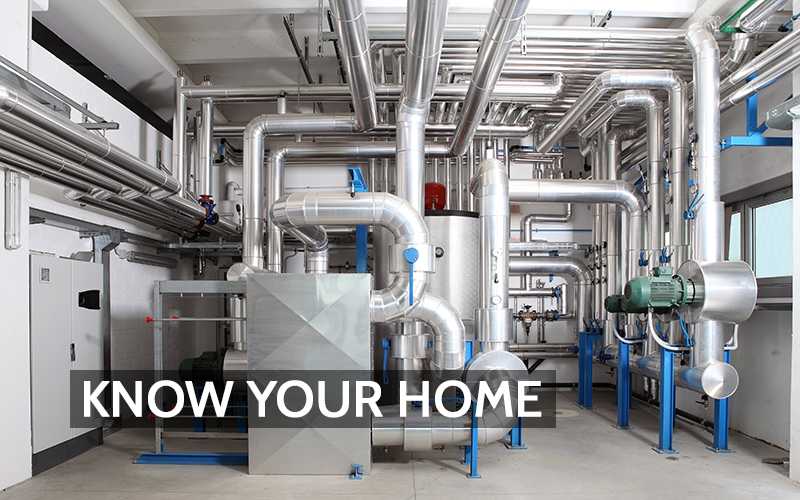
A residential heating and cooling system does more than produce warm or cold air. It pulls air from the home, filters it, changes its temperature and moisture level, and sends it back through the rooms. In many homes, the equipment that moves and conditions this air is called the air handler.
A true air handler is generally an indoor cabinet containing a blower, filter, cooling or heat-pump coil, and sometimes electric heating elements. A gas or oil furnace also moves air, but it includes burners and a heat exchanger. Both perform a similar air-distribution role.
Following the Air Through the System
The cycle begins at the return grilles. These larger vents pull room air into return ducts and carry it toward the equipment. The air passes through a filter, which protects the blower and coils while removing some airborne particles.
Next comes the blower. This motor-driven fan creates the pressure needed to move air through the cabinet and ductwork. Newer equipment may use variable-speed motors that adjust airflow more gradually than older single-speed blowers.
During cooling, air passes across the evaporator coil. Cold refrigerant inside the coil absorbs heat, while moisture condenses and drains into a pan and condensate line. This is why air conditioning reduces humidity as well as temperature.
During heating, a furnace sends air across a heat exchanger warmed by combustion. A heat-pump air handler reverses the refrigerant cycle and transfers heat into the indoor air. Many heat pumps also contain electric resistance strips for backup heat.
The conditioned air enters the supply plenum, travels through supply ducts, and returns to the rooms through registers. The thermostat tells the system when to heat, cool, stop, or run the fan.
Common Types of Residential Systems
A split air-conditioning system has an outdoor condenser and compressor connected to an indoor evaporator coil. The indoor coil may sit above a furnace or inside a separate air handler.
A central heat pump also has indoor and outdoor components, but it can provide both heating and cooling. A packaged system places most components in one outdoor cabinet connected to the home by supply and return ducts.
Ductless mini-splits use an outdoor heat pump connected to one or more indoor fan-coil units. Each unit contains its own blower, coil, and filter, so the home may not need a central air handler or full duct network.
Some homes also use heat-recovery or energy-recovery ventilators. These exchange stale indoor air with outdoor air while preserving part of the heat and, in some designs, moisture. They support ventilation but do not replace the main heating and cooling system.
Components That Protect Air Quality
The filter is the most familiar air-quality component. Filters are rated using Minimum Efficiency Reporting Value, or MERV. Higher ratings capture smaller particles but also create more airflow resistance. The best filter is one the system can handle and that fits the slot without gaps.
The evaporator coil and drain system also affect indoor air. A clogged drain can cause standing water, leaks, excessive humidity, or microbial growth. Dirty coils restrict airflow and reduce heat transfer.
Duct leaks matter as well. Return-side leaks may pull attic, basement, crawlspace, or garage air into the system. Supply leaks waste conditioned air and leave rooms uncomfortable. Routine duct cleaning is not generally necessary, but visible mold, pest contamination, or heavy debris may justify professional inspection.
Maintenance You Can Usually Do Yourself
Homeowners can inspect the filter monthly and replace or clean it according to the manufacturer’s instructions. Many filters need attention every one to three months, although pets, smoke, construction dust, and heavy use may shorten that interval.
Return grilles and supply registers can be gently vacuumed, and furniture should not block them. Leaves and vegetation can be cleared from around the outdoor unit after shutting the system off. Homeowners can also check thermostat batteries, look for water around the air handler, and listen for new rattling, grinding, or whistling sounds.
Sudden increases in energy use, weak airflow, repeated breaker trips, burning odors, water leaks, or persistent mustiness are reasons to arrange an inspection.
Work Best Left to a Professional
Refrigerant work requires specialized tools and legal handling procedures. Homeowners should not open refrigerant lines, add refrigerant, repair leaks, or replace a compressor or coil.
Electrical compartments may contain high voltage and capacitors that remain dangerous after power is switched off. Blower motors, control boards, heat strips, and internal wiring should be serviced by a qualified technician.
Fuel-burning furnaces require particular care. Burner adjustment, gas pressure, venting, ignition systems, and heat-exchanger inspection are not do-it-yourself jobs. A damaged heat exchanger or venting problem may allow carbon monoxide into the home.
Professional maintenance generally includes checking refrigerant performance, cleaning coils and blower components, testing controls, inspecting the condensate system, verifying airflow, and examining combustion equipment. Annual pre-season service is a practical baseline, with cooling checked before summer and heating before winter.
A residential air system works best when every part supports the others. A powerful new unit cannot overcome leaking ducts, a clogged filter, blocked registers, or poor installation. Understanding the air handler helps homeowners handle simple upkeep safely, recognize trouble early, and know when to call a professional.
References
- https://www.energystar.gov/saveathome/heating-cooling/maintenance-checklist
- https://www.energystar.gov/saveathome/heating-cooling
- https://www.epa.gov/indoor-air-quality-iaq/air-cleaners-and-air-filters-home
- https://www.epa.gov/indoor-air-quality-iaq/what-kind-filter-should-i-use-my-home-hvac-system-help-protect-my-family
- https://www.epa.gov/indoor-air-quality-iaq/should-you-have-air-ducts-your-home-cleaned
- https://www.energy.gov/energysaver/heat-pump-systems
- https://www.energy.gov/cmei/buildings/consumer-central-air-conditioners-and-heat-pumps
- https://www.cpsc.gov/Safety-Education/Safety-Guides/Home/The-Inside-Story-A-Guide-to-Indoor-Air-Quality