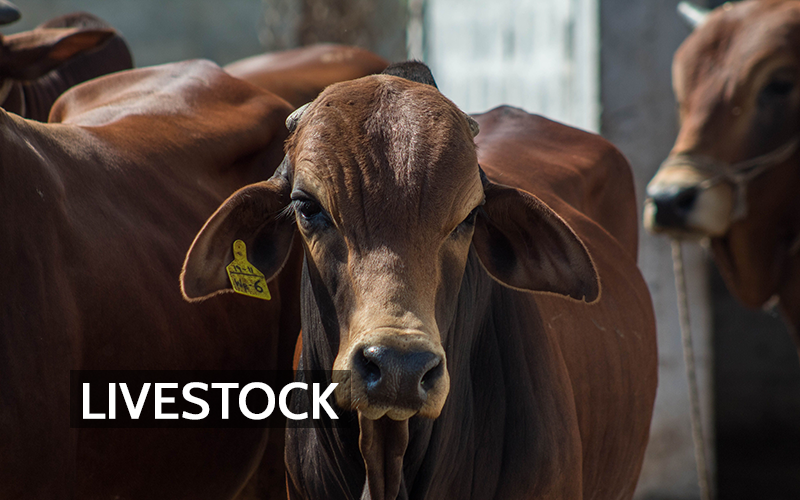
A livestock barn is more than a shelter for animals. It is a biologically active indoor environment where feed, bedding, manure, microorganisms, animals, and ventilation systems continuously interact with the air.
In enclosed poultry, dairy, and swine facilities, those interactions can produce ammonia, methane, hydrogen sulfide, dust, animal dander, microbial fragments, and other airborne contaminants. Some remain primarily an occupational concern inside the barn, while others can travel outside and participate in regional atmospheric chemistry.
Manure Is a Major Source of Ammonia
One of the most important gases produced in livestock facilities is ammonia, or NH₃.
Animals consume nitrogen in protein-rich feed, but not all of that nitrogen becomes meat, milk, or eggs. Much of it leaves the animal in urine and manure. Microbial and chemical processes then convert nitrogen-containing compounds into ammonia that can evaporate into the barn air.
Temperature, manure moisture, pH, ventilation, and the amount of time waste remains inside the building all influence emissions.
Poultry houses can be significant ammonia environments because manure accumulates within litter or beneath birds. Dairy and swine barns also produce ammonia from floors, manure pits, holding areas, and waste-storage systems.
Barn Dust Is Biologically Complicated
Dust inside an animal facility is very different from ordinary household dust.
It can contain feed particles, bedding, dried manure, skin cells, hair or feathers, soil, pollen, fungal material, bacteria, and fragments of other biological material.
Poultry facilities can produce substantial amounts of feather and litter dust, while dairy barns generate particles from hay, straw, feed, bedding, and animal movement. Swine barns contain similar mixtures derived from feed, manure, skin, and building surfaces.
Animal activity keeps this material moving. Walking, feeding, bedding replacement, ventilation, and cleaning can repeatedly send settled particles back into the air.
Endotoxins Travel With Organic Dust
Some of the smallest biological particles carry substances called endotoxins.
Endotoxins are components of the outer membranes of Gram-negative bacteria. When bacteria die or break apart, endotoxin-containing material can become incorporated into airborne dust.
Occupational studies in poultry, dairy, and swine facilities have measured substantial endotoxin exposures. Unlike a living bacterial infection, endotoxin exposure does not require the microorganism itself to remain alive.
The concern comes from the immune response produced when these bacterial components are inhaled. Studies of agricultural workers have associated organic dust and endotoxin exposure with respiratory irritation, coughing, chronic bronchitis, and other inflammatory effects.
Methane Develops Where Manure Loses Oxygen
Methane forms under very different conditions.
When manure is stored in oxygen-poor environments, microorganisms break down organic material anaerobically and generate methane, or CH₄.
Liquid manure systems are particularly favorable. Storage tanks, lagoons, and deep pits beneath swine barns can create conditions where methane production continues for long periods.
Inside a well-ventilated barn, methane usually disperses rather than accumulating to high concentrations. In confined manure spaces, however, gases can become much more concentrated.
From a broader atmospheric perspective, livestock manure is one component of agriculture’s methane emissions, along with methane produced directly through digestion by ruminants such as cattle.
Hydrogen Sulfide Can Become an Acute Hazard
Anaerobic manure decomposition can also produce hydrogen sulfide, or H₂S.
At low concentrations, hydrogen sulfide is famous for its rotten-egg smell. At high concentrations, however, the sense of smell becomes unreliable, and the gas can become acutely dangerous.
Deep manure pits and enclosed storage tanks present the greatest concern.
Agitating liquid manure before pumping or spreading can suddenly release gases that had accumulated within the waste. Concentrations in or around confined spaces can rise quickly.
For this reason, manure storage areas require particular attention to ventilation, atmospheric monitoring, and confined-space procedures.
Ventilation Has to Balance Animals, Workers, and Weather
Barn ventilation performs several jobs simultaneously.
It removes moisture, heat, gases, dust, and odors while providing fresh air for both animals and workers.
During warm weather, ventilation rates are often high because removing heat is essential. During cold weather, operators face a more difficult balance: bringing in large quantities of outside air removes contaminants but also removes heat.
Reducing ventilation too far can allow ammonia, dust, carbon dioxide, and humidity to accumulate.
Mechanical exhaust fans, filtered recirculation, local dust controls, and properly vented heaters can all improve indoor conditions when designed for the specific facility.
Manure Management Changes the Air
Controlling barn air quality often begins with controlling manure.
Frequently removing waste can reduce the amount of time available for ammonia and other gases to develop indoors. Keeping poultry litter appropriately dry can help limit ammonia formation, while manure covers, treatment systems, and modified storage practices can reduce emissions after waste leaves the barn.
Anaerobic digesters offer another strategy for liquid manure. Rather than allowing methane to escape freely, digesters collect biogas so it can be burned for energy.
That does not eliminate every emission associated with manure management, but it changes methane from an uncontrolled atmospheric release into a recoverable fuel.
Ammonia Can Become Particulate Matter After Leaving the Farm
Ammonia provides one of the clearest connections between a barn and regional air quality.
Once released outdoors, ammonia can travel away from the facility and react with acidic compounds in the atmosphere.
Reactions with nitric acid and sulfuric acid can produce ammonium nitrate and ammonium sulfate, both of which can contribute to PM2.5.
This means some particulate pollution associated with animal agriculture is not emitted as a particle at all.
A gas leaves the barn, undergoes atmospheric chemistry, and becomes part of a fine aerosol later and potentially far downwind.
The Barn Is Part of a Larger Atmospheric System
Livestock facilities demonstrate how closely indoor and outdoor air can be connected.
Inside the barn, animals, manure, feed, bedding, and microorganisms generate gases and particles. Ventilation protects animals and workers by moving those contaminants outside.
Once outdoors, some pollutants simply dilute. Others continue reacting.
Ammonia can become fine particulate matter. Methane contributes to atmospheric greenhouse chemistry. Dust can settle nearby or travel farther depending on particle size and weather.
The air inside a livestock barn is therefore not an isolated environment. It is the first stage of a larger atmospheric system connecting animal agriculture with workers, neighboring communities, and regional air quality.
References
- U.S. EPA — Agriculture and Air Quality
- U.S. EPA — Air Monitoring at Agricultural Operations
- U.S. EPA — National Air Emissions Monitoring Study
- U.S. EPA — Livestock and Poultry Feed Operations and Air Emissions
- USDA — Quantifying Greenhouse Gas Emissions From Agricultural Sources
- USDA Agricultural Research Service — Dairy Gas Emissions Model
- NIOSH — Organic Dust Exposures From Work in Dairy Barns
- NIOSH — Control of Organic Dusts From Bedding Choppers in Dairy Barns
- NIOSH — Poultry Breeding, Farming and Transport
- EPA HERO — Livestock Ammonia and Atmospheric PM2.5