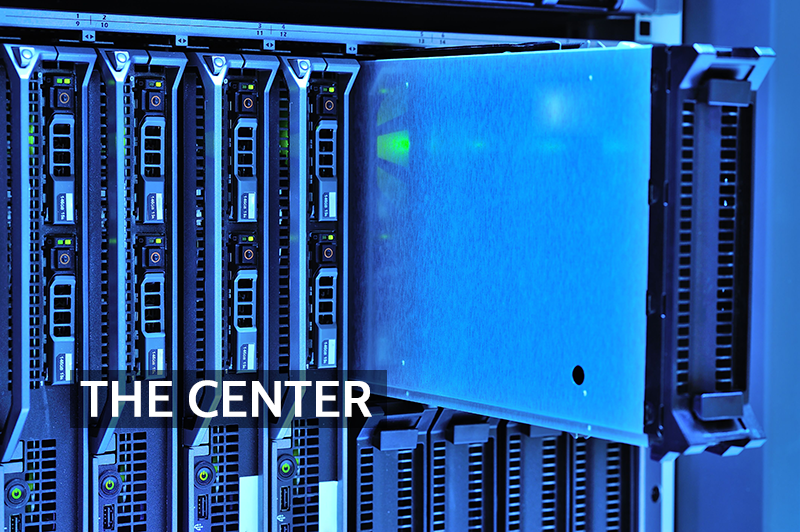
Digital services often feel almost weightless. A photograph appears from cloud storage, an artificial-intelligence model answers a question, or a video begins streaming without any obvious industrial process taking place.
Behind those services are enormous physical facilities filled with servers, electrical equipment, cooling systems, fuel tanks, and backup generators. As data-center campuses grow larger and cluster in particular communities, their relationship with air quality is attracting increasing attention.
The computers themselves do not have smokestacks. Much of the air-quality story instead comes from the infrastructure required to keep them operating continuously.
Backup Power Can Resemble a Small Power Plant
Data centers are designed around reliability. Even a brief power interruption can disrupt thousands of servers, so large facilities often maintain extensive fleets of emergency generators.
Diesel engines remain common because they can start quickly and operate independently of the electrical grid. A single large campus may contain dozens or even hundreds of generator sets, each capable of producing several megawatts of electricity.
When diesel fuel is burned, engines can emit nitrogen oxides, particulate matter, carbon monoxide, hydrocarbons, and hazardous air pollutants. Modern engines and exhaust controls can greatly reduce those emissions, but a large generator fleet remains an important potential source.
In 2026, a proposed Virginia data-center campus known as Project Raspberry listed more than 120 diesel generator sets among its planned equipment. Another proposed Virginia facility included 280 generator sets.
At that scale, equipment originally described as “backup” power becomes significant enough to require detailed air permitting.
Emergency Generators Still Have to Run
Backup generators cannot simply sit unused until a blackout occurs. Operators periodically start and load-test them to make sure they will function during an emergency.
Those maintenance exercises create short periods of real emissions even when the electrical grid is functioning normally.
Actual outages can require much longer operation. During extreme grid stress, data centers may also be asked to rely on their onsite generation so that electricity remains available elsewhere on the system.
This creates an unusual emissions pattern. A data center may produce relatively little combustion pollution during routine computing operations, followed by simultaneous operation of many large engines during testing or an electrical emergency.
For nearby communities, the number of engines, their exhaust controls, operating hours, and distance from homes can therefore matter as much as the servers inside the buildings.
NOx and Particles Are Important Generator Pollutants
Nitrogen oxides, or NOx, form during high-temperature combustion. Once released, NOx can contribute to ground-level ozone and secondary particulate matter.
Diesel engines can also emit fine particles directly. Modern diesel particulate filters can remove much of this material, while selective catalytic reduction systems are commonly used to reduce NOx emissions.
Regulators are increasingly applying these technologies to data-center projects. Virginia revised its data-center generator guidance in 2026 so that new permit applications generally face a presumptive best-available-control approach using selective catalytic reduction for NOx, oxidation catalysts for carbon monoxide, and diesel particulate filters for particulate matter.
The change illustrates how the scale of modern data-center development is reshaping what regulators expect from standby power systems.
Cooling the Cloud Requires More Infrastructure
Nearly all of the electricity consumed by a server eventually becomes heat.
Data centers therefore require continuous cooling. Traditional systems may use chillers, computer-room air conditioners, cooling towers, or combinations of air and water cooling. Newer facilities increasingly experiment with direct-to-chip liquid cooling and other systems designed for dense computing hardware.
Cooling can affect the atmosphere in several ways.
Chillers and direct-expansion air-conditioning systems may contain refrigerants. Many commonly used refrigerants are hydrofluorocarbons, or HFCs, which can have substantial climate impacts if they leak. These gases are not the same type of local air pollutant as diesel soot or NOx, but preventing refrigerant releases remains part of reducing the atmospheric footprint of cooling equipment.
Evaporative cooling towers can also release small water droplets, known as drift, and require careful water treatment and maintenance.
Construction Produces Its Own Air-Quality Footprint
Before a data center ever processes information, building one can involve years of earthmoving, road construction, concrete work, utility installation, and heavy-equipment operation.
Construction sites generate particulate matter through exposed soil, vehicle movement on unpaved surfaces, material handling, demolition, and dirt tracked onto surrounding roads. Diesel excavators, bulldozers, generators, and trucks add combustion emissions.
A single building project eventually ends. The issue becomes more significant when multiple large campuses are constructed simultaneously within the same region.
Fast-growing data-center corridors can therefore experience repeated cycles of clearing, grading, construction traffic, and infrastructure expansion even before operational emissions are considered.
Permitting Gets Complicated When Generators Multiply
Air permits are generally based on pollutants, equipment, potential operating hours, and the combined emissions of the facility.
This can make a large data center surprisingly complicated.
A single emergency generator may have limited environmental significance. One hundred generators on the same property are a different regulatory problem.
Agencies may evaluate whether engines qualify as emergency equipment, how many hours they can operate, what fuel they use, which pollution controls are installed, and what would happen if many generators ran simultaneously.
Public review can also become part of the process for larger projects, giving nearby residents opportunities to ask how emissions were calculated and what operating limits will apply.
Communities Are Looking at the Whole Campus
The rapid expansion of data centers has made them increasingly visible to the communities hosting them.
Electricity and water use receive much of the attention, but residents and regulators are also asking questions about generator exhaust, construction dust, noise, cooling equipment, new transmission infrastructure, and the cumulative effects of multiple facilities operating close together.
The important distinction is between potential emissions and everyday emissions. A permitted generator fleet is not necessarily running continuously. Treating a data center like a constantly operating diesel power plant would therefore exaggerate normal conditions.
At the same time, describing the facility as environmentally invisible because the servers run on electricity ignores the machinery required to keep those servers reliable.
The Cloud Has a Physical Address
Cloud computing is ultimately an industrial activity carried out inside real buildings.
Those buildings need power when the electrical grid fails, cooling when servers generate heat, roads and equipment during construction, and environmental controls when large combustion sources are installed.
As data centers continue growing in both number and computing density, their air-quality footprint will depend increasingly on how that supporting infrastructure is designed.
Cleaner generators, advanced exhaust treatment, lower-emission backup technologies, improved cooling systems, careful refrigerant management, construction-dust controls, and transparent permitting can all reduce the impact.
The cloud may be digital, but the infrastructure keeping it online is firmly rooted in the physical atmosphere around us.
References
- U.S. EPA — Clean Air Act Resources for Data Centers
- U.S. EPA — Basic Information for Stationary Engines
- U.S. EPA — Standards for Stationary Compression Ignition Engines
- Virginia DEQ — Air Permits and Data Center Generator Guidance
- Virginia DEQ — Issued Air Permits for Data Centers
- Virginia DEQ — Project Raspberry Data Center
- Virginia DEQ — Amazon Data Services, Louisa County
- U.S. Department of Energy — Cooling Water Efficiency Opportunities for Federal Data Centers
- U.S. EPA — Hydrofluorocarbons
- U.S. EPA — Particulate Matter Emissions From Construction Operations