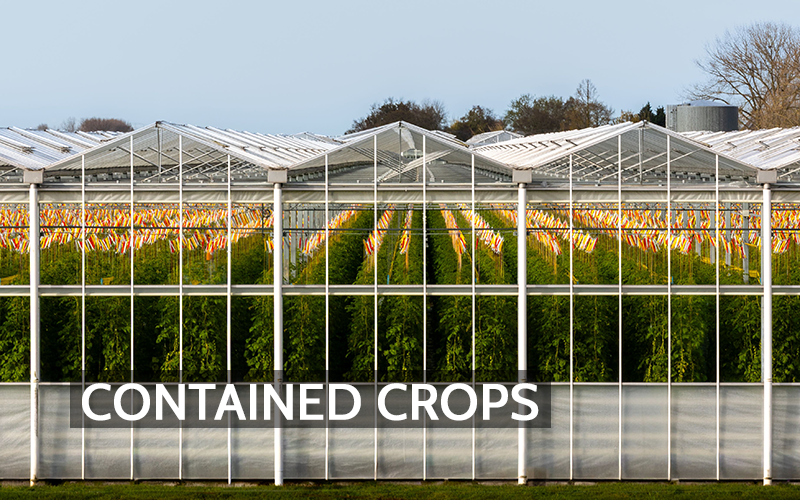
A greenhouse or indoor farm is essentially a building whose atmosphere has been redesigned for plants. Temperature, humidity, carbon dioxide, light, and airflow are manipulated to increase photosynthesis and crop growth, often creating conditions very different from those in an office, school, or home.
That controlled atmosphere also creates unusual air-quality challenges. Thousands of plants release enormous quantities of water vapor, microorganisms grow readily in humid environments, pesticides and fertilizers can become airborne during application, heaters create combustion products, and the plants themselves emit volatile organic compounds. Maintaining the right environment therefore requires balancing crop productivity with worker exposure and building ventilation.
Carbon Dioxide Can Be Intentionally Elevated
In most occupied buildings, rising carbon dioxide is primarily associated with human respiration and is often used as an indicator of how effectively a space is being ventilated. Greenhouses can operate according to the opposite principle.
Plants consume CO₂ during photosynthesis. In a tightly sealed greenhouse or vertical farm, crops can remove CO₂ faster than outdoor air replaces it, potentially lowering concentrations below ambient atmospheric levels and slowing photosynthesis.
Growers may therefore deliberately inject CO₂ into the growing space. Depending on the crop and conditions, controlled-environment facilities commonly raise concentrations into roughly the 700–1,500 parts-per-million range to support plant growth.
Those concentrations are far below the OSHA occupational exposure limit of 5,000 ppm averaged over an eight-hour workday. Even so, deliberately adding CO₂ to an occupied building is unusual and requires sensors and careful control. A malfunctioning injection system or confined area can create conditions very different from the intended growing environment.
Plants Turn Water Into an HVAC Problem
A large crop is effectively a biological humidifier.
Plants continuously move water from their roots to their leaves and release it into the atmosphere through transpiration. Water also evaporates from growing media, irrigation systems, floors, and hydroponic equipment.
In a densely planted indoor farm, that moisture can become one of the largest loads placed on the environmental-control system.
High humidity encourages condensation on leaves, glazing, pipes, walls, and equipment. It can also create favorable conditions for plant diseases such as Botrytis and powdery mildew.
Reducing humidity usually means exchanging moist indoor air with drier outdoor air or using mechanical dehumidification. Both approaches consume energy, particularly when the incoming air must then be reheated, cooled, or humidified again.
Mold and Bioaerosols Grow With the Crop
A greenhouse contains far more biological material than most indoor environments.
Leaves, flowers, pollen, soil or growing media, microorganisms, algae, decaying roots, and crop residues can all contribute to airborne biological particles. Fungal spores are especially important because warm, humid environments can support extensive fungal growth.
Occupational studies of greenhouse workers have measured airborne fungi, bacteria, endotoxins, and organic dust. Activities such as harvesting, pruning, handling mature plants, and especially removing old crops can temporarily generate much higher bioaerosol concentrations.
Air circulation helps control humidity around leaves, but it can also transport spores and dust throughout the facility. Greenhouse airflow must therefore support plant health without simply redistributing contamination.
Pesticides Can Remain in Enclosed Air
Pesticides used in enclosed agriculture deserve particular attention because a greenhouse limits atmospheric dilution compared with an open field.
Sprays, mists, and fogging systems can leave droplets suspended in the air during and shortly after application. Some pesticide ingredients can also volatilize from treated plant surfaces, while dried residues may later become resuspended during work activities.
EPA’s Worker Protection Standard includes specific requirements for pesticide applications in greenhouses, including restricted-entry periods, ventilation criteria, worker notification, and protective equipment.
The enclosed environment makes timing especially important. A product that disperses rapidly outdoors may persist differently when surrounded by walls, dense vegetation, and limited ventilation.
Fertilizer Can Become Airborne Too
Fertilizer is usually considered a water or soil issue, but some greenhouse operations can also place fertilizer-related material into the air.
Handling dry fertilizer powders can create dust, while foliar feeding, misting, and spraying nutrient solutions can produce airborne droplets. Tilling, potting, mixing growing media, and moving dried plant material can add additional particulate matter.
Indoor farms using hydroponic or aeroponic systems may have less soil dust, but they replace traditional soil management with pumps, nutrient reservoirs, misting systems, and large amounts of recirculating water.
The exact airborne exposure depends heavily on how nutrients are mixed and delivered.
Heating Can Create Combustion Pollution
Greenhouses in colder climates often require substantial heating.
Natural gas, propane, fuel oil, or other fuels may be burned in boilers or unit heaters. Properly vented systems discharge combustion products outdoors, but malfunctioning or unvented equipment can release carbon monoxide, nitrogen oxides, ethylene, sulfur compounds, and unburned hydrocarbons into the growing space.
Some greenhouses intentionally use fuel-burning CO₂ generators because combustion produces carbon dioxide that plants can consume. This makes burner maintenance especially important: a device intended to fertilize the atmosphere with CO₂ can become a source of harmful gases if combustion is incomplete.
Plants themselves can also be surprisingly sensitive to combustion pollutants. Ethylene at very low concentrations can cause abnormal growth, flower damage, or premature leaf and fruit loss.
Plants Produce Their Own VOCs
Plants do not simply absorb gases from the atmosphere. They also release them.
Vegetation naturally produces biogenic volatile organic compounds, including terpenes, alcohols, aldehydes, and other molecules involved in signaling, defense, reproduction, and responses to environmental stress.
The familiar smell of herbs, flowers, tomato foliage, or coniferous plants is partly the result of these compounds entering the surrounding air.
In outdoor ecosystems, plant VOCs participate in complex atmospheric chemistry and can contribute to ozone or secondary organic aerosol formation under certain conditions. Inside a greenhouse, their significance depends on crop species, plant density, lighting, temperature, ventilation, and other chemical sources.
Ventilation Creates a Constant Tradeoff
Opening a greenhouse vent can solve several problems at once. It can remove excess heat, humidity, CO₂, pesticide vapors, combustion products, and biological aerosols.
It can also create new problems.
Ventilation may release deliberately added CO₂, increase heating or cooling demand, alter humidity, introduce outdoor pollutants, and disturb the carefully controlled atmosphere needed for crop production.
Vertical farms face an even greater engineering challenge because they may operate in buildings with almost no natural ventilation. Mechanical cooling, dehumidification, filtration, circulation, and CO₂ control must work together continuously.
Farming the Atmosphere
Controlled-environment agriculture does more than grow plants indoors. It creates an artificial ecosystem whose atmosphere must be managed as carefully as its water and nutrients.
Plants consume carbon dioxide while releasing moisture and VOCs. Microorganisms contribute spores and bioaerosols. Agricultural chemicals can become airborne. Heating equipment can add combustion products, while workers spend hours inside the same enclosed environment.
The HVAC system therefore becomes part of the farming process itself.
In a greenhouse or vertical farm, managing air is not simply about keeping occupants comfortable. The atmosphere is one of the crop inputs—and controlling it successfully means designing an environment that works for both the plants being grown and the people growing them.
References
- Virginia Tech — Controlled Environment Agriculture Facilities’ Atmospheres
- UMass Amherst — Reducing Humidity in the Greenhouse
- University of Alaska Fairbanks — Controlling the Greenhouse Environment
- University of Florida IFAS — Heating Greenhouses
- EPA — Restrictions During Pesticide Applications Under the Worker Protection Standard
- EPA — Definition of a Pesticide Handler Under the Worker Protection Standard
- NIOSH — Carbon Dioxide: Pocket Guide to Chemical Hazards
- PubMed — Aerobiological Air Quality in Rooftop Greenhouses
- PubMed — Dust, Endotoxin, Fungi, and Bacteria Exposure in Flower Greenhouses
- PMC — Plant Biogenic Volatile Organic Compounds