Water and air may appear to be separate parts of the environment, but they constantly exchange heat, gases, droplets, and particles. The chemistry of a local lake, river, wetland, reservoir, or groundwater supply can therefore influence the air above it and, in some cases, the air inside nearby buildings.
Clean water generally creates fewer air-quality concerns. Polluted, stagnant, salty, or biologically active water can release odors, gases, aerosols, and particles. Understanding these connections requires looking beyond what is dissolved in the water and asking how that material might enter the atmosphere.
Water Droplets Can Carry Contaminants
Water itself evaporates as individual molecules, leaving most salts, metals, microorganisms, and other nonvolatile materials behind. However, waves, fountains, sprinklers, waterfalls, aeration systems, and breaking bubbles can launch complete droplets into the air.
These droplets may contain whatever was present in the water. Near the ocean, breaking waves create sea-spray aerosol made mostly of salt, along with smaller amounts of organic material produced by marine organisms. Similar processes occur around freshwater lakes, wastewater basins, cooling ponds, decorative fountains, and irrigated fields.
Most larger droplets settle quickly. Smaller droplets may remain airborne long enough for their water to evaporate, leaving behind tiny particles of salt, minerals, organic matter, or biological material.
This becomes more important when the water is polluted. Research is examining whether coastal spray can transfer microorganisms, toxins, and other contaminants from polluted water into the air. The amount reaching people depends on wind, wave activity, distance from shore, droplet size, and the concentration of material in the water.
Stagnant Water Can Release Gases and Odors
When water contains abundant organic matter, bacteria begin consuming it. If the water is well oxygenated, much of the decomposition produces carbon dioxide. When oxygen becomes depleted, different microorganisms take over and may produce methane, hydrogen sulfide, ammonia, and other odorous gases.
Hydrogen sulfide produces the familiar rotten-egg smell associated with some swamps, sewers, stagnant ponds, and wastewater systems. Ammonia and volatile organic compounds can also contribute to odors near polluted water.
These smells do not always indicate a dangerous concentration, but they can signal oxygen-poor water and active decomposition. At high concentrations, some gases can irritate the eyes and respiratory system or become hazardous to workers entering enclosed sewers, tanks, or treatment structures.
Wastewater treatment plants intentionally aerate water to support microorganisms that break down waste. This improves water quality, but the agitation can also help volatile chemicals escape into the air. Facilities may use covers, ventilation, activated carbon, chemical scrubbers, or biological odor-control systems to capture these emissions.
Algae and Microorganisms Can Become Airborne
Nutrients such as nitrogen and phosphorus support plant and algae growth. Excessive nutrient pollution from fertilizer, sewage, or stormwater can produce harmful algal blooms.
Some cyanobacteria create toxins, taste-and-odor compounds, or irritating material. Waves and bubbles may place small amounts of bloom material into airborne droplets near the water. The health importance of inhaling these aerosols is still being studied, but monitoring is especially valuable around heavily used lakes, beaches, and reservoirs experiencing visible blooms.
Ordinary bacteria, fungal material, pollen, and fragments of aquatic organisms may also enter the air through spray. Water quality therefore influences not only chemical emissions but also the biological content of local aerosols.
Drying Water Can Become a Dust Problem
Water-quality problems can continue after the water disappears. When a lake, pond, wetland, or irrigation basin shrinks, salts and contaminants that were dissolved or suspended in the water may remain in the exposed sediment.
Once dry, that sediment can be broken apart and lifted by wind. Dust from exposed lakebeds may contain fine mineral particles, salts, metals, agricultural residues, or biological material accumulated over many years.
This process is particularly important in arid regions, where water diversion and evaporation can expose large areas of shoreline. Managing the water level, planting vegetation, applying temporary surface treatments, or creating shallow-water habitat can help reduce dust.
Household Water Can Affect Indoor Air
Water quality can also influence indoor air when volatile chemicals leave tap water during use. Showering, washing dishes, boiling water, and operating washing machines increase contact between water and air.
Radon dissolved in some groundwater can escape into indoor air when well water is used. Certain volatile organic compounds and disinfection byproducts can also transfer from water into the air, particularly during hot showers. For most homes, soil beneath the building remains the more important source of radon, but private-well users may be advised to test their water when local geology or indoor-air results suggest a concern.
Which Water Tests Relate to Air Quality?
Several common water-quality measurements can reveal conditions that may eventually affect the air.
Dissolved oxygen and biochemical oxygen demand show whether microorganisms are consuming oxygen. Low oxygen and high organic activity may favor methane, hydrogen sulfide, and odor production.
pH and alkalinity influence chemical reactions and whether certain compounds remain dissolved or enter the gas phase.
Conductivity, total dissolved solids, and salinity estimate the amount of dissolved mineral material. These measurements are useful when evaluating aerosols from spray or dust from dried sediments.
Nitrogen, phosphorus, ammonia, and chlorophyll measurements help identify nutrient pollution and the potential for algal blooms.
Sulfide testing can help investigate hydrogen sulfide odors, while volatile organic compound testing identifies chemicals capable of escaping from water during aeration or household use.
Metals testing measures elements such as arsenic, lead, manganese, and mercury. Metals do not normally evaporate, but they may become airborne in water droplets or contaminated dust after sediment dries.
Laboratories may also test for cyanotoxins, pesticides, petroleum compounds, radon, dissolved organic carbon, bacteria, and other contaminants based on local risks.
Who Performs the Testing?
Public drinking-water systems collect samples and use state-certified laboratories to test for regulated contaminants. State drinking-water agencies and the Environmental Protection Agency review those results and oversee compliance.
Municipal wastewater utilities and industrial facilities test their discharges under Clean Water Act permits. State environmental agencies, authorized Tribal programs, EPA inspectors, and certified contract laboratories may review or verify this monitoring.
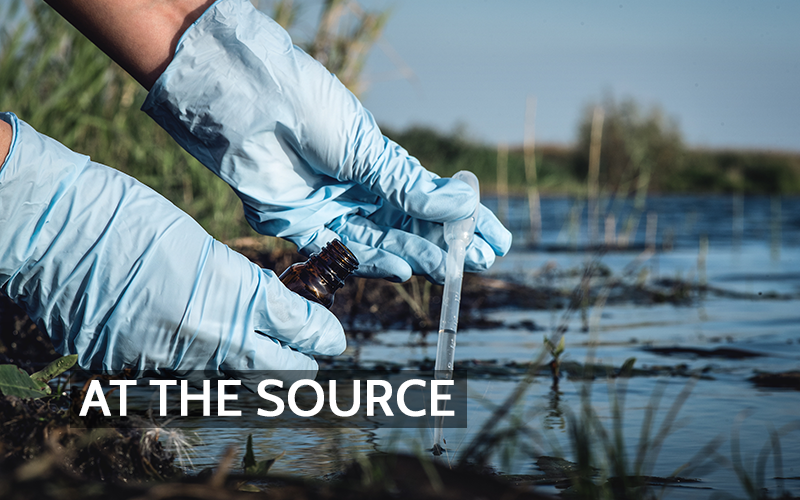
Surface waters are also sampled by state agencies, local watershed groups, universities, public-health departments, and the U.S. Geological Survey. Local health departments often provide guidance for beaches, harmful blooms, and private wells.
Private domestic wells are not regulated by the federal government in the same way as public water systems. Well owners are generally responsible for arranging their own testing through qualified laboratories.
Local air and water quality are closely connected. A polluted water body may release gases while full, produce aerosols when disturbed, and become a dust source after drying. Testing the water can therefore provide an early warning about problems that may eventually move beyond the shoreline and into the air.
References
- https://www.epa.gov/water-research/water-sensors-toolbox
- https://www.epa.gov/awma/factsheets-water-quality-parameters
- https://www.epa.gov/dwlabcert/contact-information-certification-programs-and-certified-laboratories-drinking-water
- https://www.epa.gov/compliance/safe-drinking-water-act-compliance-monitoring
- https://www.epa.gov/compliance/clean-water-act-cwa-compliance-monitoring
- https://www.epa.gov/privatewells
- https://www.epa.gov/privatewells/protect-your-homes-water
- https://archive.epa.gov/water/archive/web/html/basicinformation-2.html
- https://www.epa.gov/sdwa/overview-drinking-water-treatment-technologies
- https://www.epa.gov/sites/default/files/2015-08/documents/ii05.pdf
- https://coastalscience.noaa.gov/project/aerosolized-coastal-water-pollution-impacts-study/
- https://csl.noaa.gov/news/2024/417_0826.html