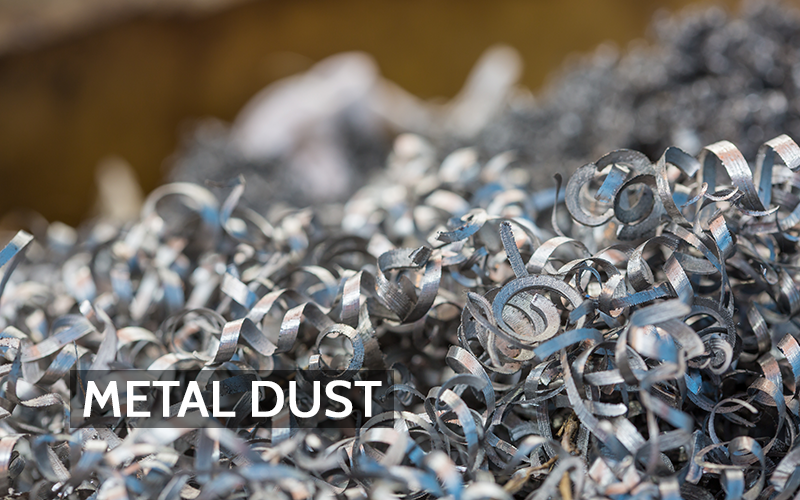
Metal manufacturing can turn heavy, solid materials into particles small enough to float through the air. Cutting, grinding, sanding, welding, casting, polishing, and handling powdered metals can all release dust or fumes into a workplace. If these emissions escape through doors, vents, or poorly controlled exhaust systems, they may also affect air quality around the facility.
Metal particulate is not a single pollutant. Its health effects, fire hazards, and required controls depend on the metal involved, the particle size, and the process that created it. Iron dust from mechanical grinding presents different concerns than lead particles from battery recycling or ultrafine chromium-containing fumes from stainless-steel welding.
Dust, Fume, and Smoke Are Not the Same
Mechanical processes such as sawing, drilling, sanding, and grinding physically break metal into smaller pieces. These operations generally produce dust containing particles of many sizes. Larger particles settle onto floors and equipment, while respirable particles may remain airborne and travel deep into the lungs.
High-temperature processes produce a different type of particulate. During welding, cutting, smelting, or casting, metal can vaporize. As the vapor cools, it condenses into extremely small metal or metal-oxide particles called fume. Welding fume may contain particles much smaller than those produced by ordinary grinding.
The base metal is only part of the mixture. Welding fumes can also contain material from filler wire, electrodes, surface coatings, paint, plating, lubricants, and contamination on the workpiece. Hot processes may simultaneously generate gases such as ozone, nitrogen oxides, and carbon monoxide.
Why Metal Composition Matters
Iron and mild-steel dust may irritate the respiratory system, while long-term exposure to welding fumes can contribute to chronic lung problems. However, certain metals require much stricter precautions because they can harm organs throughout the body or cause cancer.
Lead can damage the nervous system, kidneys, blood, and reproductive system. Exposure can occur during battery manufacturing and recycling, soldering, smelting, metal reclamation, or work involving old lead-containing coatings. Lead dust may also contaminate workers’ hands, clothing, vehicles, and homes, creating a risk for family members.
Stainless-steel welding deserves special attention because high temperatures can convert chromium into hexavalent chromium, or Cr(VI). This form can damage the respiratory system and increase lung-cancer risk. Stainless alloys may also contain nickel, another metal associated with respiratory and cancer concerns.
Cadmium may be present in coatings, pigments, batteries, alloys, and some plated components. Heating cadmium-coated metal can create highly toxic fume. Beryllium, used in certain aerospace, electronic, nuclear, and precision alloys, can cause chronic beryllium disease in susceptible workers even at very low airborne concentrations.
Manganese is present in many welding consumables and steels. Although it is an essential nutrient in small amounts, excessive inhalation can affect the nervous system. Zinc oxide fume, commonly produced when welding galvanized steel, can cause metal fume fever, a temporary flu-like illness involving fever, chills, fatigue, and muscle aches.
Knowing the exact alloy, coating, and consumable is therefore essential. Treating all metal dust as ordinary nuisance dust can leave workers unprotected from much more hazardous substances.
Different Processes Create Different Risks
Grinding and polishing release particles directly near the worker’s face and may throw sparks into accumulated dust. Enclosures, tool-mounted extraction, and local exhaust ventilation can capture this material close to its source.
Welding requires controls positioned near the arc without disrupting shielding gas or pulling fumes through the worker’s breathing zone. Portable extraction arms, downdraft tables, ventilated welding booths, and fume-extraction guns may be used depending on the job.
Foundries generate emissions during melting, pouring, cooling, shakeout, and casting cleanup. Dust may contain metal oxides as well as crystalline silica from sand molds. Large foundries may require enclosed equipment, capture hoods, baghouses, scrubbers, or other industrial air-pollution controls.
Additive manufacturing introduces another concern. Metal 3D-printing systems may use fine powders containing aluminum, titanium, nickel, cobalt, or other alloys. Powder loading, part removal, cleaning, sieving, and recycling can release particles unless the equipment is enclosed and carefully maintained.
Combustible Metal Dust Requires Special Controls
Some metal dusts create both a health hazard and an explosion hazard. Finely divided aluminum, magnesium, titanium, and certain other metals can burn rapidly when dispersed in air. Even metals that appear difficult to ignite as solid pieces may become explosive as fine dust.
Ordinary shop vacuums, nonrated electrical equipment, sparks, static electricity, and open flames can ignite a suspended dust cloud. A small explosion may disturb additional material resting on beams, pipes, or equipment, creating a much larger secondary explosion.
Metal dust collectors must be designed for the particular material and process. Some reactive metals should not be collected with water because they can react and produce flammable hydrogen gas. Other applications may specifically require wet collection. Mixing incompatible metals in one collector can also create new hazards.
Facilities must evaluate combustibility before choosing a vacuum, collector, extinguishing method, or housekeeping procedure. A system suitable for steel grinding may be unsafe for magnesium or titanium powder.
Controlling Metal Particulate
The most effective control is to avoid creating hazardous airborne material. Facilities may substitute a less toxic alloy or coating, purchase components in a finished form, or automate a dusty process inside an enclosure.
Local exhaust ventilation should capture dust or fume where it is generated. The collected air may pass through cartridge filters, baghouses, HEPA filtration, wet collectors, electrostatic precipitators, or scrubbers selected for the emission and fire risk.
Good housekeeping prevents settled material from becoming airborne again. Dry sweeping and compressed-air cleaning can spread contamination and should generally be replaced with approved HEPA-filtered vacuums or suitable wet-cleaning methods. Work clothing, change areas, handwashing, and restrictions on taking contaminated items home are especially important for toxic metals such as lead and beryllium.
Employers may collect personal air samples from workers’ breathing zones and analyze filters for individual metals. Surface-wipe samples can reveal contamination on tools, workstations, break areas, and changing facilities. Medical surveillance may be required for workers exposed to certain regulated metals.
Respirators provide an additional layer of protection when engineering controls cannot fully control exposure, but they must be properly selected, fit-tested, and used within a complete respiratory-protection program.
Metal manufacturing is essential to modern life, but the material does not always remain in the finished product. Understanding how each process changes a metal, and how each metal behaves once airborne, is the foundation of protecting workers, nearby communities, and the facility itself.
References
- https://www.osha.gov/sites/default/files/publications/OSHA_FS-3647_WELDING.pdf
- https://www.osha.gov/lead/
- https://www.osha.gov/hexavalent-chromium
- https://www.osha.gov/beryllium/
- https://www.osha.gov/combustible-dust
- https://www.osha.gov/sites/default/files/otm_secIV_chap6.pdf
- https://www.osha.gov/publications/3371combustible-dust
- https://www.cdc.gov/niosh/welding/about/index.html
- https://www.cdc.gov/niosh/npg/npgd0666.html
- https://www.cdc.gov/niosh/engcontrols/ecd/detail44.html
- https://www.cdc.gov/niosh/engcontrols/about/index.html
- https://www.epa.gov/stationary-sources-air-pollution/integrated-iron-and-steel-manufacturing-national-emission
- https://www.epa.gov/stationary-sources-air-pollution/iron-and-steel-foundries-national-emission-standards-hazardous-air