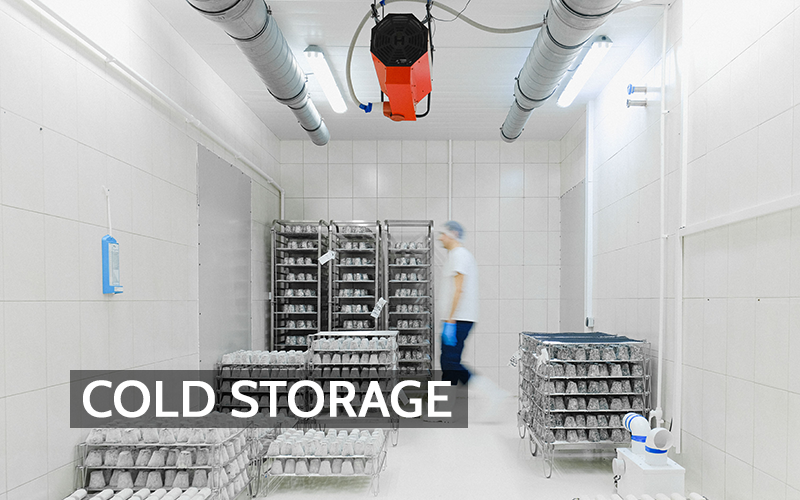
Cold-storage warehouses use insulation, sealed doors, and refrigeration to protect temperature-sensitive products. Many freezer rooms must keep large volumes of air below freezing while workers and forklifts move through them. Limiting warm-air entry reduces energy use and helps prevent ice buildup. Indoor air quality also depends on controlling exhaust, preventing refrigerant leaks, and moving air through occupied areas.
Circulation and Ventilation Do Different Jobs
Fans commonly move air across cooling coils and redistribute it through the room. This circulation can maintain product temperatures without introducing much outdoor air. If contaminants enter the space, cooling and recirculation alone may allow them to remain. Ventilation planning therefore needs to address the actual pollution sources and the people working nearby.
Refrigerants Become Air Hazards When They Leak
Refrigerants circulate inside sealed equipment and piping during normal operation. Some facilities use ammonia, which can severely irritate or burn the eyes, skin, and lungs if released. A failed valve, pipe, or cooling coil can allow refrigerant into storage or service areas. Preventive maintenance and appropriate leak detection help limit this risk.
Carbon dioxide (CO₂) is also used as a refrigerant and creates an odorless gas hazard if it leaks. High concentrations can disrupt breathing and cause unconsciousness, in addition to displacing oxygen. An oxygen alarm alone may not warn before CO₂ levels become harmful. Monitoring for CO₂ directly is therefore important where a release could occur.
Forklift Exhaust Can Accumulate
Fuel-powered forklifts can release carbon monoxide and other combustion pollutants. Carbon monoxide (CO) is a colorless, odorless poison, making it difficult for workers to recognize exposure without monitoring. Limited outdoor-air exchange can allow emissions to build up. Electric forklifts remove this combustion source from the storage space. Where fuel-powered equipment is used, exhaust control, adequate ventilation, maintenance, and CO monitoring remain important.
Cold Air Can Form Uneven Layers
Cold, dense air tends to settle below warmer air, creating the potential for temperature layers. Fan operation, door traffic, and packed racks all affect how well the air mixes. Poorly served corners or aisles may have weaker air movement than spaces directly in front of a fan. This means airflow assessments and gas-detector locations need to reflect the actual storage arrangement and potential release points.
Condensation and Frost Affect the Whole System
Warm, humid air entering through doors or leaks brings both heat and water vapor. As that air cools, moisture can form fog, condensation, frost, or ice. Fog can reduce visibility, while frost on cooling coils restricts airflow and reduces refrigeration efficiency. The cooling system must remove heat from the incoming air and from water vapor as it condenses or freezes.
Moisture control also depends on the condition of the building enclosure. Damaged door seals, gaps in insulation systems, and breaks in vapor barriers can allow unwanted moisture movement. Ice or condensation can then develop in places that are difficult to inspect or clean. Maintaining the enclosure and managing defrost cycles help preserve both cooling performance and effective air circulation.
Balancing Ventilation With Refrigeration
Well-maintained seals, vestibules, and rapid-closing doors limit uncontrolled heat and moisture entry. Planned ventilation can then be matched to occupancy and pollution sources, with replacement air dried and cooled as needed. Refrigerant leak detection and emergency exhaust provide a separate response to sudden gas releases. Alarms and monitors need to suit the target gases and the cold, potentially damp conditions where they operate. Changes in racking, vehicle use, or refrigeration equipment warrant new checks of airflow and detection coverage.