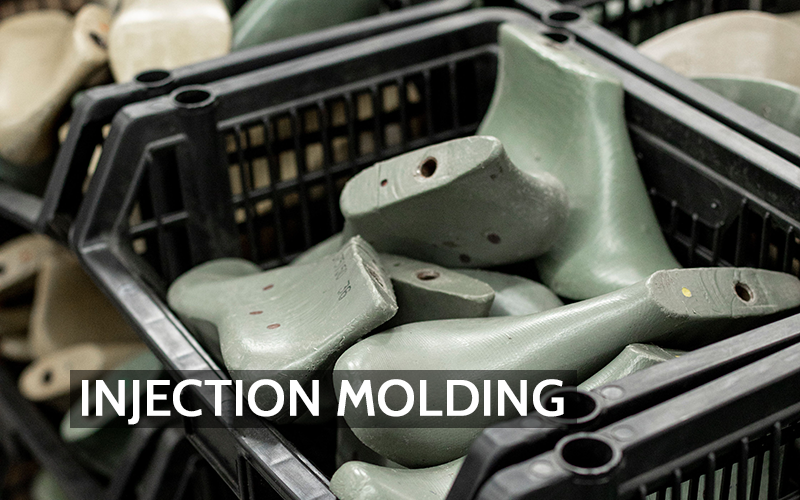
Plastic injection molding turns pellets into products such as containers, appliance housings, and mechanical parts. The machine heats the plastic until it flows, pushes it into a mold, and allows it to cool into a solid shape. Airborne emissions can include both chemical vapors and very small particles. Their composition depends on the resin, its additives, and how the heated material is handled.
Heat and Time Change the Chemistry
Heating can release residual chemicals and some additives from a plastic resin. Some emissions are volatile organic compounds, or VOCs, which readily enter the air as gases. If plastic becomes too hot or stays in the heated barrel too long, its molecular chains can break down and produce additional chemicals. Depending on their composition and concentration, plastics fumes can irritate the eyes and airways, and some are associated with occupational asthma.
Different Polymers Release Different Chemicals
ABS, widely used in product housings, can release styrene during thermal processing. Nylon 6 can release caprolactam, the chemical used to make that particular type of nylon. Other nylon grades have different chemistry, so the same emission profile cannot be assumed for every nylon product. Pigments, flame retardants, stabilizers, and other additives can further change the mixture released into the air.
Different polymers also produce different chemicals as they break down. When overheated, PVC can release hydrogen chloride, an irritating, corrosive gas. Overheated low-density polyethylene can release butane and other hydrocarbons, while overheated polypropylene can produce formaldehyde and acrolein. Acetal can release formaldehyde as it degrades. These are examples of possible breakdown products, with actual emissions depending on temperature, heating time, and formulation.
Some Particles Are Too Small to See
Research on injection molding has detected ultrafine particles, which measure less than 100 nanometers across. These particles are far smaller than visible dust and can reach deep into the lungs. Their presence may not produce an obvious cloud or haze. Their health significance depends on their composition and how much workers inhale.
Tasks Around the Press Also Matter
Startup, material changes, and purging deserve attention alongside routine production. Purging clears material from the machine by pushing out hot plastic, potentially exposing the melt to workplace air. In one small-scale molding operation, NIOSH measured increases in particle or organic-vapor concentrations during machine warm-up and pellet loading. These findings show why monitoring only steady production can miss important exposure patterns.
Some operations also use mold-release agents to help parts separate from the mold. Spraying these products creates airborne droplets, while solvent-based formulations can add VOCs. Mold cleaners introduce another potential vapor source. Exposure therefore reflects the combination of plastics, supporting chemicals, and work practices around the press.
Controlling Emissions at the Source
Using the supplier’s processing guidance for the exact resin grade helps prevent avoidable decomposition. Reliable temperature controls, working alarms, and attention to residence time are important parts of this approach. Local exhaust ventilation can capture emissions where hot plastic or chemical sprays are exposed, including purging areas. General ventilation supplies replacement air and helps control pollutants that escape source capture. Particle filters can collect airborne particles, while chemical vapors require suitable exhaust or treatment designed for those substances.
Air sampling should reflect the chemicals being processed and the tasks workers perform. Particle measurements and sampling for specific gases or vapors provide different information about exposure. Respiratory protection may be needed where other controls do not adequately reduce exposure. Changes in resin grade, additives, operating conditions, or release products should prompt a review of the exposure assessment.
References
- UK Health and Safety Executive: Controlling Fume During Plastics Processing
- Forrest and colleagues: Emissions From Processing Thermoplastics
- Lee and colleagues: Occupational Asthma and Emissions During Plastic Injection Processing
- NIOSH: Workplace Evaluation Including ABS Injection Molding
- Sebastiani and colleagues: Particle Exposure During Injection Molding of Polymer Composites
- Institute for Research and Technical Assistance: Low-VOC Release Agents and Mold Cleaners