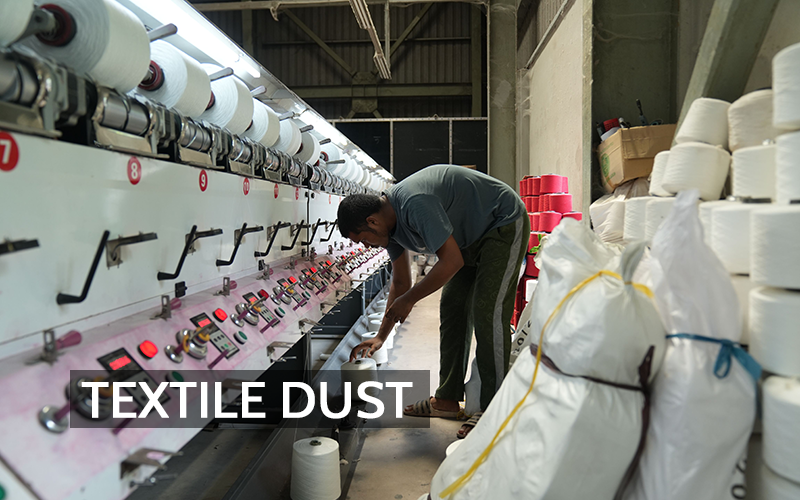
Textile manufacturing changes loose fibers into yarn, cloth, and finished products. Along the way, machinery can release dust and lint, while dyeing and finishing add chemical exposures. Heating the fabric can introduce another mixture of vapors and particles. These stages often occur in different facilities, so workplace air quality depends on the material and the job being performed.
Opening, Spinning, and Weaving Release Dust
Opening compressed bales and separating fibers can shake loose dust carried in with the raw material. Cotton may contain plant fragments and other contaminants, while wool handling also generates organic process dust. Carding machines separate and align fibers before spinning twists them into yarn. Fast-moving machinery and air currents can help release and spread dust during these operations. Weaving adds repeated yarn movement and friction as threads are interlaced into fabric.
Cutting, brushing, and trimming fabric can release more lint and small fragments. Polyester and other synthetic materials can also produce airborne dust during processing. The visible fluff collecting on machinery represents only part of the exposure, since smaller particles can remain suspended in the air. Dust may also carry chemicals applied earlier in production.
Why Raw Cotton Dust Needs Special Attention
Cotton dust is associated with byssinosis, an occupational airway disease that can cause chest tightness, coughing, wheezing, and breathing difficulty. Research has linked bacterial endotoxin in cotton dust to reduced lung function. Endotoxin is material from the cell walls of certain bacteria, so the hazard involves more than the cotton fibers themselves. Wool process dust can also cause respiratory irritation and occupational asthma, although its risks differ from those of cotton dust.
Dyes Introduce Chemical Exposures
Dyeing introduces another exposure, often before the fabric enters a dye bath. Weighing and pouring powdered dyes can create clouds of fine particles. Some reactive dyes can cause sensitization, meaning a worker develops an allergic response to the dye. Later exposure to even small amounts may then trigger asthma symptoms. Liquid formulations reduce powder handling, but splashing or vigorous mixing can still create airborne droplets.
Finishes and Heat Change the Emissions
Chemical finishes can make fabric resist wrinkles, stains, static, or fire. Some wrinkle-resistant or flame-resistant treatments use formaldehyde-based resins. Unreacted formaldehyde can be released as a gas or carried in dust when treated fabric is cut or sewn. Exposure can irritate the eyes, nose, and throat.
Dryers, curing ovens, and heat-setting machines can release airborne chemicals as fabric is heated. Heat-setting helps polyester and other synthetic fabrics retain their shape. Heating can release volatile organic compounds, or VOCs, from processing oils, finishing chemicals, and other residues on the fabric. The mix can include formaldehyde and vapors from solvents or softeners, depending on the formulation.
Capturing Dust and Chemical Emissions
Enclosures and local exhaust ventilation can capture fiber dust and chemical emissions before they spread through a mill. Extraction is especially useful at opening machines, carding equipment, cutting stations, dye-weighing benches, and heated finishing equipment. Using liquid or reduced-dust dyes can limit powder exposure. Industrial vacuum cleaning removes settled material without the dust clouds caused by dry sweeping or compressed air. General ventilation provides replacement air and helps manage background pollution, heat, and humidity.
Controls also need to match the type of pollutant. Filters designed to collect lint or dust do not automatically remove chemical vapors. Air sampling and, where indicated, lung-function testing help identify exposures and early health changes. Respiratory protection may be needed where other controls do not adequately reduce exposure.
References
- UK Health and Safety Executive: Dust in Textile Production
- NIOSH: Lung Disease in Textile Workers
- NIOSH Pocket Guide: Raw Cotton Dust
- UK Health and Safety Executive: Dyes and Dyeing
- UK Health and Safety Executive: Handling Treated Fabrics
- EPA: Profile of the Textile Industry
- Zuskin and colleagues: Respiratory Findings in Synthetic Textile Workers