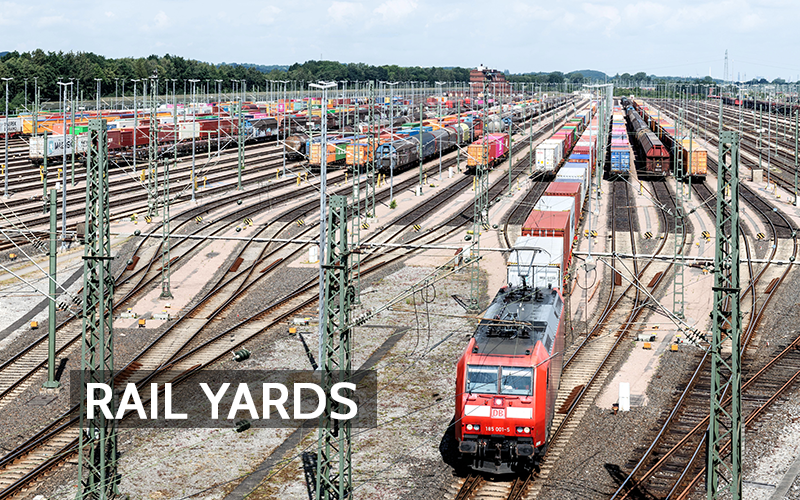
Rail yards and locomotive shops combine large engines with metalworking, cleaning, and repair. Diesel exhaust shares the air with dust from brakes, sand, and maintenance tasks. Outdoors, pollution moves with the wind and nearby train activity. Inside an engine house, controlling where those emissions travel becomes an important part of protecting workers.
Diesel Exhaust From Working and Idling Engines
Switcher locomotives assemble trains and may work or idle for long periods in the yard. Diesel exhaust contains soot particles, organic compounds, and gases such as nitrogen oxides and carbon monoxide. Fine particles can reach deep into the lungs, and breathing exhaust can irritate the eyes and airways. Exposure depends on engine condition, workload, ventilation, and the worker’s position. Long-term exposure to diesel exhaust increases lung cancer risk.
Brakes and Traction Sand Create Different Dusts
Braking and contact between wheels and rails create particles as materials wear. Brake dust can contain iron, copper, and other metals, depending on the friction materials used. Deposited dust can become airborne again when components are cleaned, moved, or serviced. Dry sweeping and compressed-air blowing can spread it through work areas.
Many locomotives carry sand that can be applied between wheels and rails to improve grip. Refilling hoppers or servicing sand-delivery systems can release fine dust. If the sand contains crystalline silica, its respirable fraction can reach deep into the lungs. Excessive exposure can cause silicosis, a disease that permanently scars the lungs. Exposure depends on how the sand is handled and contained.
Repair Work Adds Fumes and Vapors
Grinding, sanding, and cutting parts or coatings can release metal-containing dust. Welding produces tiny particles known as fumes, with their composition depending on the metal, filler material, and surface coatings. Solvent-based degreasers, cleaners, and paints can add volatile organic compounds, or VOCs, to the air. These tasks need controls suited to their emissions, such as extraction at grinding tools, welding hoods, and enclosed cleaning equipment.
Engine Houses Need Exhaust Capture and Fresh Air
Running an engine inside a shop creates a concentrated exhaust plume within a shared work area. Avoiding unnecessary indoor engine operation reduces the pollution that ventilation must handle. When running is necessary, properly designed hoods or exhaust connections can capture emissions at the locomotive’s stack. Their placement must match the locomotive, since a misaligned hood may allow exhaust to escape into the building. These systems must also handle the high airflow and temperatures of locomotive exhaust.
General ventilation remains important for supplying replacement air, removing heat, and diluting pollution that escapes capture. Airflow must reach work areas around and below the locomotive, including inspection pits. The design needs to account for engine power, the number of engines operating, and their operating conditions. Exhaust should discharge outdoors where it cannot be drawn back into building air intakes.
Reducing Exposure Across the Facility
Reducing avoidable idling cuts emissions before they enter the workplace. Automatic stop-start systems, external electrical hookups, and systems that maintain brake air pressure can reduce the need to keep main engines running. Regular engine maintenance and suitable emissions-control upgrades also help reduce pollution. These approaches can benefit both rail workers and nearby communities.
Inside shops, extraction for dusty repairs and welding needs to work alongside engine-exhaust control. Industrial vacuum cleaning or suitable wet methods reduce the amount of dust stirred back into the air. Monitoring should address diesel particles, relevant gases, and dusts such as silica. A carbon monoxide alarm alone does not measure these other pollutants. Respiratory protection may be needed where engineering controls do not adequately reduce exposure.
References
- EPA: Rail Facility Best Practices to Improve Air Quality
- IARC: Diesel Engine Exhaust and Lung Cancer
- Rail Safety and Standards Board: Silica Exposure During Sand-System Work
- NIOSH: Silica and Worker Health
- ASHRAE: Enclosed Vehicular Facilities, Including Locomotive Shops
- Research on Airborne Wear Particles From Train Brake Materials
- UK Health and Safety Executive: Controlling Welding Fume
- UK Health and Safety Executive: Solvent Exposure and Controls
- Government of Canada: Controlling Workplace Diesel Exhaust