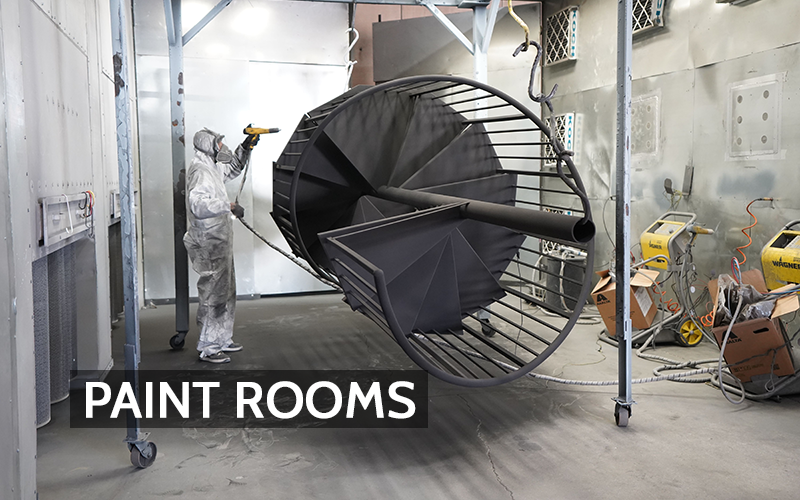
Spray painting seems simple from a distance. A worker points a spray gun at a vehicle, cabinet, machine part, or other surface and applies a smooth coating. In the air around that object, however, the process creates a cloud of tiny paint droplets along with vapors released from solvents and other coating ingredients.
A spray booth is designed to keep that cloud from spreading through the rest of the workplace. Its ventilation system moves air in a controlled direction, captures overspray, removes vapors, and carries contaminated air away from the painter.
Not All of the Paint Reaches the Surface
A spray gun breaks liquid coating into thousands of small droplets so that it can form an even layer. Some droplets land on the object, while others remain suspended in the air as overspray.
That overspray may contain pigments, resins, solvents, and other ingredients from the coating. Depending on the paint, workers can also encounter substances such as metals or isocyanates, which are used in some high-performance coatings and can create serious respiratory hazards.
High-volume, low-pressure spray guns can reduce overspray by transferring more coating to the intended surface. Better transfer efficiency means less paint is released into the booth air in the first place.
A Spray Booth Creates Controlled Airflow
A spray booth is not simply a room with an exhaust fan. The supply and exhaust systems are arranged so that air moves past the worker and painted object toward a controlled collection point.
In a crossdraft booth, air generally moves horizontally from one end of the booth to the other. In a downdraft booth, clean air enters from above and moves downward toward exhaust openings near or beneath the floor.
NIOSH research has found that properly operated downdraft booths can reduce worker exposure to overspray compared with some crossdraft designs. By moving contamination downward and away from the painter, the airflow can prevent more of the spray cloud from passing through the breathing zone.
Makeup Air Replaces What the Fan Removes
Exhausting large amounts of air creates another problem because that air has to be replaced. Makeup air systems bring clean air into the booth to replace what is being pulled outside.
Without enough makeup air, the exhaust fan may struggle to maintain the intended airflow. Doors can become difficult to open, air may enter through unwanted gaps, and the carefully designed flow pattern inside the booth can become uneven.
The incoming air also needs to be distributed carefully. Air supplied too quickly or from the wrong direction can create turbulence that pushes overspray back toward the worker instead of toward the exhaust.
Filters Capture Overspray, Not Everything
Before booth air reaches the exhaust duct, it commonly passes through filters designed to capture paint droplets and particles. These filters help keep overspray from coating fans and ductwork and reduce the amount of particulate matter released outdoors.
Filters gradually load with paint as the booth is used. As resistance increases, airflow can decrease, which is why filter replacement and pressure monitoring are important parts of booth maintenance.
Ordinary overspray filters have an important limitation. They are designed mainly to capture particles and droplets, and they generally do not remove most solvent vapors or other VOCs from the exhaust air.
Vapors Continue After Spraying Stops
Paint can continue releasing volatile chemicals after the spray gun has been turned off. Solvents evaporate as coatings dry, and some products undergo chemical curing reactions over a longer period.
OSHA requires spray-area ventilation to continue while spraying is taking place and long enough afterward to remove vapors from drying coatings and residues. Shutting the ventilation system down immediately after painting can allow those pollutants to accumulate inside the booth.
Heated curing can further change the situation by increasing evaporation. Booths that combine spraying and drying therefore need controls that coordinate heating, ventilation, and other equipment safely.
Ventilation Also Helps Prevent Fire
Many paints and solvents can produce flammable vapors. A poorly ventilated booth can therefore create a fire or explosion hazard in addition to exposing workers to chemicals.
OSHA requires mechanical ventilation to keep dangerous concentrations of vapors, mists, powders, and residues under control. Electrical equipment, fans, lighting, and other components in spraying areas must also be designed to reduce the chance that a spark or hot surface will ignite the atmosphere.
Paint residue itself can create another hazard when it collects on booth walls, floors, filters, and ducts. Regular cleaning is therefore part of both air-quality management and fire prevention.
Airflow Can Fail Without the Fan Stopping
A booth fan can still be running while the ventilation system performs poorly. Loaded filters, blocked ducts, damaged fan components, clogged air intakes, or poorly balanced makeup air can gradually change the amount and direction of airflow.
Objects placed in the wrong location can also interfere with ventilation. The painter’s position matters because standing between the painted object and the exhaust can cause contaminated air to travel past the worker before leaving the booth.
Airflow indicators, pressure gauges, inspections, and routine maintenance help show whether the system is still operating as designed. A booth that sounds normal is not necessarily moving enough air in the right direction.
Controlling the Spray Cloud
Paint booth ventilation works by controlling pollution at the moment it is created. Better spray equipment reduces the amount of overspray, directed airflow moves contamination away from workers, filters collect droplets, and exhaust systems remove vapors from the building.
The result depends on all of those pieces working together. A well-designed booth is not simply a place to contain paint because it is an engineered air system built around the path that particles and vapors take after they leave the spray gun.