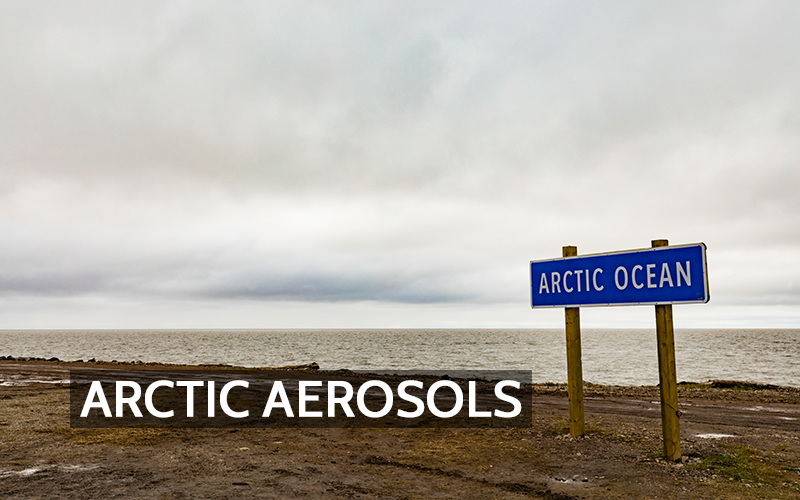
The Arctic Circle encompasses parts of eight countries—including Canada, Russia, Norway, and the United States (via Alaska)—and holds fewer than four million people across over 8 million square miles. Yet, despite this low population density, the region regularly experiences elevated levels of particulate matter (PM), black carbon, ozone, and other pollutants.
This counterintuitive reality stems from two key sources: long-range atmospheric transport of pollutants and increasing local human activity. Both contribute to what scientists refer to as “Arctic haze”—a seasonal pollution phenomenon that’s most intense during late winter and early spring.
Atmospheric Highways: How Pollution Reaches the Arctic
The primary culprit behind Arctic air pollution is transboundary pollution, meaning contaminants travel thousands of kilometers via wind currents from industrial regions. Major sources include:
-
Coal-fired power plants in Eastern Europe and Asia
-
Industrial emissions from North America and Europe
-
Agricultural burning in Russia, China, and Kazakhstan
-
Shipping exhausts from expanding maritime routes
These pollutants hitch a ride on tropospheric winds, especially during the Arctic winter when a meteorological effect known as the polar dome traps polluted air in the region. The stable atmosphere and limited sunlight in winter inhibit vertical mixing, allowing pollutants to accumulate rather than disperse.
By the time this air mass reaches the Arctic, it has become a haze filled with sulfates, nitrates, soot, and heavy metals, significantly affecting visibility, air quality, and climate dynamics.
Black Carbon: A Dark Force on the Ice
Among the most concerning pollutants in the Arctic is black carbon, a product of incomplete combustion from diesel engines, residential heating, wildfires, and open biomass burning. Though black carbon only remains in the atmosphere for a short time, its impact in the Arctic is severe.
When black carbon particles settle on ice and snow, they reduce albedo, meaning the surface reflects less sunlight and absorbs more heat. This accelerates melting, contributing to sea level rise and permafrost thaw, which in turn releases trapped methane—a potent greenhouse gas.
Recent studies estimate that 25–30% of Arctic warming is linked directly to black carbon and ozone pollution, not just carbon dioxide [AMAP, 2021].
Local Sources of Pollution: Industry and Exploration
While long-range transport dominates Arctic air pollution, local emissions are increasing as the region becomes more accessible due to climate change. Warming temperatures have opened new frontiers for:
-
Oil and gas extraction
-
Mining operations
-
Tourism and research activities
-
Increased shipping through the Northern Sea Route
The Arctic is rapidly becoming a new industrial frontier. In some areas, localized emissions from diesel generators, flaring, and heavy machinery contribute significantly to air pollution, especially near populated outposts and resource extraction zones.
Moreover, wildfires in boreal forests, once rare in Arctic latitudes, are becoming more frequent and intense, further degrading air quality. The 2020 Siberian wildfires, for instance, released record levels of smoke and black carbon into the Arctic atmosphere.
Health Impacts on Arctic Communities
Indigenous and local Arctic populations—such as the Inuit, Sámi, and Nenets—bear the brunt of these changes. Even with low regional pollution sources, these communities face elevated exposure levels due to:
-
Reliance on wood and diesel for heating
-
Diets that bioaccumulate heavy metals and POPs (persistent organic pollutants)
-
Limited healthcare access in remote areas
Exposure to PM2.5, black carbon, and tropospheric ozone increases the risk of respiratory diseases, cardiovascular problems, and even developmental delays in children. The Arctic Council has repeatedly emphasized the need for environmental justice and protection of vulnerable populations in the region.
Climate Feedbacks and Global Implications
The Arctic is warming nearly four times faster than the global average—a phenomenon known as Arctic amplification. Air pollutants like black carbon and ozone exacerbate this warming through both direct radiative effects and surface albedo changes.
This warming destabilizes global weather patterns, including the jet stream, contributing to extreme weather events far beyond the polar region. Furthermore, permafrost thaw may unleash massive quantities of methane and carbon dioxide, feeding a dangerous feedback loop.
Thus, Arctic air pollution is not a local issue—it’s a global one. Controlling it could offer near-term climate benefits and slow down global warming more effectively than CO₂ mitigation alone.
Mitigation Efforts and International Cooperation
Efforts to reduce Arctic air pollution require a multi-pronged, international approach. Notable initiatives include:
-
The Arctic Council’s Expert Group on Black Carbon and Methane, which tracks emissions and promotes reduction strategies.
-
The Climate and Clean Air Coalition (CCAC), a global partnership focused on short-lived climate pollutants.
-
IMO sulfur emission limits, which restrict sulfur content in marine fuels and help reduce shipping pollution in Arctic waters.
Countries like Norway and Canada are also investing in cleaner Arctic infrastructure, such as electric ferry systems and renewable energy projects for remote communities. However, enforcement and monitoring remain challenging due to harsh weather, sparse populations, and geopolitical tensions.
Conclusion: A Call for Vigilance and Action
Air pollution in the Arctic is a striking example of how no region is immune to the consequences of industrialization and fossil fuel dependence. While the Arctic may seem far removed from our daily lives, the pollutants we release into the air eventually find their way to the North, altering its fragile ecosystems and amplifying global climate risks.
Preserving the Arctic requires not only reducing emissions at the source but also committing to international cooperation, indigenous inclusion, and science-driven policy. The Arctic is not just a victim—it is a barometer of global environmental health. What happens there reverberates around the world.