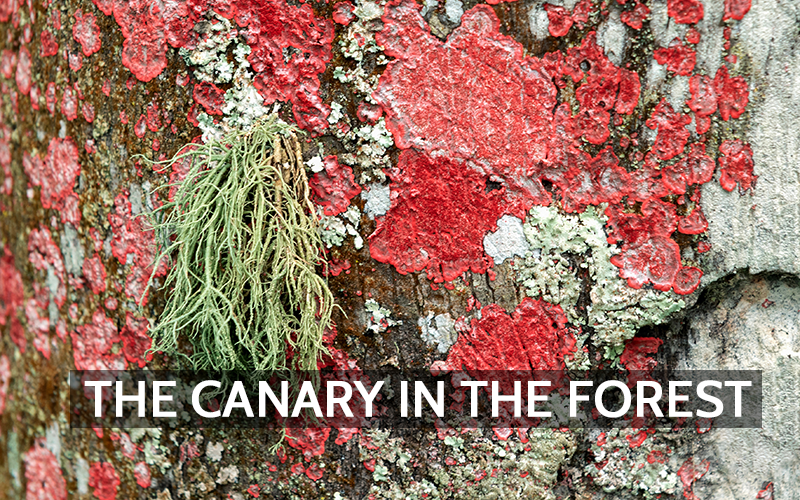
Lichens, the often-overlooked organisms growing on rocks, trees, and buildings, are more than just curious biological mosaics. These symbiotic organisms—formed from a partnership between a fungus and an alga or cyanobacterium—are highly sensitive to environmental conditions, especially air pollution. Because of this sensitivity, lichens have emerged as natural bioindicators, helping scientists and environmentalists monitor air quality without relying solely on mechanical sensors.
What Are Lichens?
Lichens are complex organisms composed of two or more distinct species living together in a symbiotic relationship. The fungal partner provides structure and protection, while the photosynthetic partner—either green algae or cyanobacteria—produces food through photosynthesis. This union enables lichens to colonize some of the harshest environments on Earth, from Arctic tundras to urban walls.
Despite their resilience in extreme habitats, lichens are surprisingly fragile in polluted environments. Their ability to absorb water and nutrients directly from the atmosphere makes them exceptionally vulnerable to airborne contaminants such as sulfur dioxide (SO₂), nitrogen oxides (NOₓ), ozone (O₃), and heavy metals.
Lichens as Air Quality Bioindicators
Environmental scientists classify lichens as “bioindicators” because their health and distribution reflect air quality conditions. When air pollution levels rise, many lichen species decline in number or disappear altogether. Conversely, the presence of certain pollution-tolerant lichens may indicate that an area is experiencing high concentrations of airborne contaminants.
Researchers often assess lichen diversity and abundance to infer environmental conditions. A high diversity of lichen species, including those sensitive to pollution, typically points to cleaner air. A low diversity, dominated by a few hardy species, suggests deteriorating air quality.
One widely used method is the Lichen Diversity Value (LDV), which quantifies the number and type of lichens found at a particular site. This method has been successfully applied in both rural and urban contexts, from Scandinavian forests to the streets of London and New York City.
The Chemistry Behind Lichen Sensitivity
Lichens lack roots and a protective cuticle, so they absorb nearly all of their nutrients from the atmosphere. This feature, while advantageous in clean environments, becomes a liability in polluted settings. Sulfur dioxide, for example, interferes with photosynthesis by acidifying cell structures and denaturing essential enzymes. Nitrogen compounds can cause nutrient imbalances, favoring certain algae over others and disrupting the lichen’s internal symbiosis.
Heavy metals like lead, mercury, and cadmium accumulate in lichen tissues and can cause cellular damage, especially in more sensitive species. This metal-accumulating property also makes lichens useful for long-term environmental monitoring and retrospective pollution studies.
Urban vs. Rural Air Quality as Seen Through Lichens
Lichen distributions reveal stark contrasts between urban and rural environments. In many cities, air pollution has drastically reduced lichen biodiversity. Only a few hardy species, like Lecanora conizaeoides or Xanthoria parietina, manage to survive under constant exposure to nitrogen and other urban pollutants.
In contrast, rural and mountainous regions, particularly those with low industrial activity, often support a wide range of lichens, including highly sensitive species like Usnea and Lobaria. These regions act as benchmarks for baseline air quality and serve as crucial reference points for broader environmental studies.
Some countries have developed “lichen zones” or “lichen belts” as a form of ecological mapping. These belts categorize areas based on which lichens are present, helping regulators and researchers monitor pollution patterns without deploying expensive equipment.
Modern Applications and Policy Relevance
Lichen monitoring complements modern air quality instrumentation by offering long-term and spatially comprehensive data. Whereas air monitors measure pollutants at fixed locations and for limited time frames, lichens integrate air quality conditions over months or even years. This cumulative perspective is particularly useful for assessing chronic exposure and detecting subtle pollution trends.
In Europe, lichen biomonitoring forms part of the European Bioindicator Network (EuroBionet), which collaborates with cities to assess nitrogen and heavy metal deposition. In the U.S., the U.S. Forest Service’s Air Resource Management Program uses lichens to evaluate pollution in remote national parks and wilderness areas.
Lichens also play a role in public education and environmental awareness. Citizen science programs, like the OPAL Air Survey in the UK, encourage individuals to observe and report local lichens as a proxy for air quality, fostering community engagement with environmental issues.
Limitations of Using Lichens as Indicators
Despite their value, lichens have limitations as air quality indicators. Their slow growth and long life cycles mean that they respond to pollution changes over extended periods. This delay makes them less useful for detecting short-term pollution spikes. Additionally, factors such as humidity, sunlight, and substrate type can also influence lichen growth, introducing confounding variables that must be controlled for in rigorous scientific assessments.
Moreover, interpreting lichen data requires taxonomic expertise. Misidentification can lead to inaccurate conclusions, especially in regions with high biodiversity. Therefore, lichen studies often require collaboration between ecologists, chemists, and trained field personnel.
Conclusion
Lichens offer a unique and cost-effective method of monitoring air quality, serving as living sensors that absorb and record environmental conditions over time. Their presence, diversity, and health reveal crucial information about pollution levels and ecosystem integrity. While not a replacement for traditional air quality sensors, lichen-based monitoring provides a complementary tool that enhances our ability to detect, map, and respond to environmental threats.
As the global community seeks to reduce air pollution and mitigate climate change, lichens will remain vital partners in understanding how the air we breathe affects the world around us.