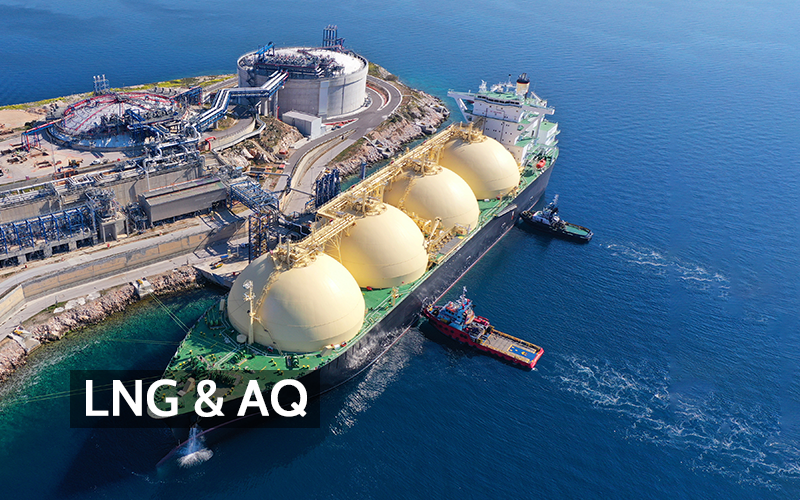
Natural gas is commonly moved through pipelines, but pipelines cannot easily connect every producing region with every customer. Liquefied natural gas, commonly called LNG, allows natural gas to be stored compactly and transported across oceans.
LNG can help replace fuels that produce large amounts of smoke, sulfur pollution, and particulate matter. However, producing, cooling, shipping, and using it still affects air quality. Understanding LNG requires looking at its entire journey rather than only the moment when the fuel is burned.
What Is Liquefied Natural Gas?
Natural gas consists mainly of methane, along with smaller amounts of other gases. Before it becomes LNG, the gas is processed to remove water, carbon dioxide, sulfur compounds, heavier hydrocarbons, and other materials that could freeze or interfere with equipment.
The purified gas is then cooled to approximately −260 degrees Fahrenheit, or −162 degrees Celsius. At this temperature, methane becomes a clear cryogenic liquid. Its volume is about 600 times smaller than the same amount of natural gas in gaseous form.
This reduced volume makes long-distance storage and shipping practical. LNG is not normally delivered as a liquid through the pipes leading to homes. It is usually converted back into gas at a receiving terminal before entering the regional pipeline system.
How LNG Is Acquired and Distributed
The LNG supply chain begins with natural gas production. Gas is extracted from underground formations through wells, sometimes using hydraulic fracturing. It then travels through gathering pipelines to processing plants, where impurities and valuable natural-gas liquids are removed.
Pipeline-quality gas is transported to an LNG export terminal. Large compressors and refrigeration systems gradually cool the gas until it becomes liquid. The LNG is stored in heavily insulated tanks designed to limit heat transfer.
Specialized ships carry LNG inside insulated cargo tanks. Small amounts naturally warm and evaporate during transport, creating what is called boil-off gas. Modern vessels may use this gas as fuel, return it to the cargo tanks, or manage it through specialized equipment.
At the importing country, LNG is unloaded into storage tanks at a receiving terminal. Vaporizers warm the liquid and return it to a gaseous state. The gas then enters transmission pipelines for delivery to power plants, industries, commercial buildings, and local utilities. LNG can also be transported in specialized trucks or containers to locations without pipeline access.
Air Quality Near Production and Processing
Natural gas production can release methane and volatile organic compounds through equipment leaks, storage tanks, valves, compressors, maintenance activities, and intentional venting.
Methane is not usually toxic at normal outdoor concentrations, but it is a powerful greenhouse gas. It also contributes indirectly to the formation of ground-level ozone through atmospheric chemical reactions.
Volatile organic compounds can react with nitrogen oxides in sunlight to form ozone. Some natural-gas emissions may also contain hazardous chemicals such as benzene. Diesel engines used for drilling, pumping, and transportation add nitrogen oxides, carbon monoxide, and particulate matter.
Providers reduce these emissions through leak-detection programs, improved seals and valves, vapor-recovery systems, reduced venting, cleaner engines, and cameras or sensors that identify escaping methane.
Liquefaction and Terminal Emissions
Turning natural gas into LNG requires large amounts of energy. Liquefaction plants often use gas-powered turbines, compressors, boilers, heaters, and emergency generators. These sources can emit nitrogen oxides, carbon monoxide, carbon dioxide, volatile organic compounds, and small amounts of particulate matter.
Flaring may occur during startup, shutdown, maintenance, or unusual operating conditions. A properly operating flare converts methane and other gases mainly into carbon dioxide and water, but it can also create nitrogen oxides, carbon monoxide, smoke, or unburned hydrocarbons.
LNG terminals can reduce local pollution by using electric compressor drives, low-nitrogen-oxide burners, efficient turbines, enclosed vapor systems, continuous emission monitoring, leak detection, and limits on routine flaring.
Communities near large terminals may be especially concerned about the combined emissions from the LNG plant, nearby refineries, ships, trucks, pipelines, and compressor stations. Environmental reviews therefore consider cumulative air quality as well as the emissions from one facility.
LNG Ships and Port Air
Traditional cargo ships often burn petroleum-based marine fuels that release sulfur oxides, nitrogen oxides, soot, and fine particulate matter. Using LNG as a marine fuel can greatly reduce sulfur emissions and direct particle pollution because natural gas contains little sulfur and burns without producing large amounts of soot.
This can benefit air quality around ports and shipping routes. LNG engines can still produce nitrogen oxides, however, and incomplete combustion may allow unburned methane to pass through the engine. This is called methane slip.
Methane slip may reduce some of LNG’s climate advantage, even when the ship produces less local sulfur and particle pollution. Engine design, operating conditions, exhaust treatment, and methane monitoring therefore matter when evaluating LNG-powered vessels.
What LNG Means for Consumers
After LNG is converted back into gas, consumers generally receive it through the same pipelines and appliances used for other natural gas.
Burning natural gas usually produces less direct particulate matter and sulfur dioxide than burning coal, heating oil, or wood. Replacing those fuels may improve local air quality, especially at power plants, industrial boilers, and ports.
Natural gas is not emission-free. High-temperature combustion forms nitrogen oxides, which contribute to ground-level ozone and fine-particle formation. Poor combustion can produce carbon monoxide. Carbon dioxide is released whenever methane is completely burned.
Indoor appliances require special attention. Gas stoves, ovens, furnaces, and water heaters can release nitrogen dioxide, carbon monoxide, and other combustion products. Exhausted appliances should vent outdoors, and kitchens should use effective range hoods. Carbon monoxide alarms provide an essential warning but do not replace proper maintenance and ventilation.
Managing the Full Air-Quality Tradeoff
LNG can produce important local air-quality benefits when it replaces coal, heavy fuel oil, or poorly controlled diesel equipment. Those benefits are greatest for sulfur pollution, soot, and direct particulate emissions.
Its overall effect depends on controlling methane leaks and reducing emissions from wells, processing plants, liquefaction terminals, ships, receiving facilities, pipelines, and consumer appliances. A small improvement at the final burner may be outweighed if large quantities of methane escape earlier in the supply chain.
LNG is therefore best understood as a method of transporting natural gas rather than an entirely separate fuel. Its influence on air quality begins at the gas well, crosses pipelines and oceans, and continues into power plants, factories, businesses, and homes. Careful monitoring and emission controls at every stage determine whether its potential advantages are fully realized.
References
- https://www.eia.gov/energyexplained/natural-gas/liquefied-natural-gas.php
- https://www.energy.gov/hgeo/liquefied-natural-gas-lng
- https://www.energy.gov/hgeo/articles/lng-basics
- https://www.energy.gov/hgeo/understanding-liquefied-natural-gas-lng
- https://www.epa.gov/natural-gas-star-program/primary-sources-methane-emissions
- https://www.epa.gov/natural-gas-star-program/engine-exhaust
- https://www.epa.gov/controlling-air-pollution-oil-and-natural-gas-operations
- https://www.epa.gov/indoor-air-quality-iaq/what-are-combustion-products
- https://www.epa.gov/indoor-air-quality-iaq/nitrogen-dioxides-impact-indoor-air-quality
- https://www.phmsa.dot.gov/pipeline/liquified-natural-gas/lng-facility-siting
- https://www.phmsa.dot.gov/pipeline/liquified-natural-gas/lng-regulatory-documents
- https://www.ferc.gov/interstate-natural-gas-facility-my-land-what-do-i-need-know
- https://www.imo.org/en/ourwork/environment/pages/clean%20air%20in%20shipping.aspx