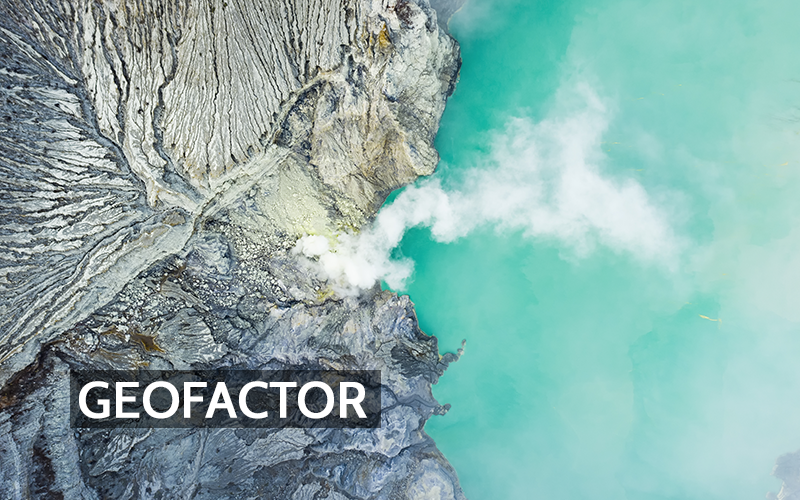
The atmosphere is often described as a mixture of gases produced by living organisms, human activity, and weather. However, the solid Earth also plays an important role in determining what the air contains.
Volcanoes release gases from deep underground. Wind carries mineral dust from exposed rock and sediment. Chemical weathering removes carbon dioxide from the atmosphere, while radioactive elements in soil produce radon. Over millions of years, plate tectonics controls the balance between many of these processes.
Some geological effects are sudden and dramatic. Others operate so slowly that they become visible only when scientists study ancient rocks, sediments, and climate records.
Volcanoes Release More Than Ash
Volcanic eruptions are among the clearest examples of geology entering the atmosphere. Magma contains dissolved gases that escape as pressure decreases near the Earth’s surface.
Water vapor is usually the most abundant volcanic gas. Volcanoes also release carbon dioxide, sulfur dioxide, hydrogen sulfide, hydrogen chloride, hydrogen fluoride, and smaller amounts of other gases.
Sulfur dioxide is especially important to atmospheric chemistry. Once released, it reacts with water vapor, oxygen, and other compounds to form sulfuric acid and sulfate particles. Near an active volcano, this mixture can create volcanic smog, commonly called vog. It may irritate the eyes and respiratory system, reduce visibility, damage plants, and contribute to acidic deposition.
Large explosive eruptions can send sulfur dioxide into the stratosphere, above much of the atmosphere’s weather. Sulfate particles formed at this altitude may remain suspended for months or years and reflect some incoming sunlight back into space. This can temporarily cool parts of the planet.
Volcanic carbon dioxide behaves differently. It contributes to the global carbon cycle but generally does not produce the short-term cooling associated with sulfate particles. Carbon dioxide can also collect near the ground around volcanic or geothermal areas because it is denser than ordinary air, creating a localized hazard in low-lying spaces.
Geological Heat Releases Gases Without Eruptions
A volcano does not need to erupt to influence the air. Fumaroles, hot springs, mud pots, and geothermal fields can continuously release steam, carbon dioxide, hydrogen sulfide, methane, ammonia, and trace gases.
Hydrogen sulfide produces the rotten-egg odor associated with many geothermal areas. At low concentrations, it may be noticeable mainly as an odor. At higher concentrations, it can irritate the respiratory system and become dangerous.
Scientists monitor the chemistry and amount of gas escaping from volcanic and geothermal systems. Changes in carbon dioxide, sulfur dioxide, or other gases can provide clues about moving magma, underground heat, and possible changes in volcanic activity.
Erosion Produces Chemically Active Dust
When wind, water, ice, and temperature changes break rock into smaller pieces, the resulting sediment can eventually become airborne. Deserts, dry lakebeds, volcanic deposits, glacial sediments, and exposed agricultural soils are major sources of mineral dust.
Mineral dust is not chemically uniform. Its particles may contain quartz, clay, calcium carbonate, iron oxides, salts, and many other minerals. This composition affects how the dust interacts with sunlight and surrounding gases.
Dark, iron-rich particles can absorb solar energy and warm the surrounding air. Lighter minerals may reflect sunlight and produce a cooling effect. Dust particles also provide surfaces on which atmospheric chemical reactions can occur.
Ozone, nitrogen compounds, sulfur dioxide, and water can interact with mineral surfaces. Calcium-rich dust may partly neutralize acidic compounds, while other minerals can encourage the formation of nitrate or sulfate particles. A dust storm therefore does more than add particles to the air. It can change the chemical form, movement, and atmospheric lifetime of other pollutants.
Mineral dust may also influence cloud formation by giving water droplets or ice crystals a surface on which to develop. When dust lands in the ocean, iron and phosphorus within it can fertilize phytoplankton. Because these microscopic organisms absorb carbon dioxide during photosynthesis, airborne geology can indirectly influence the atmosphere through marine biology.
Rock Weathering Removes Carbon Dioxide
Geological processes do not only add material to the atmosphere. Chemical weathering gradually removes carbon dioxide.
Rainwater absorbs carbon dioxide and forms a weak carbonic acid. As this water moves through soil and across rock, it reacts with silicate minerals. The reactions release dissolved materials, including bicarbonate ions, which rivers carry toward the ocean.
Some of this carbon eventually becomes incorporated into carbonate minerals and marine sediments. The complete process operates over hundreds of thousands to millions of years, making silicate weathering an important part of Earth’s long-term climate regulation.
Weathering tends to increase under warm, wet conditions because chemical reactions and water movement become more active. This creates a slow feedback: warmer conditions can accelerate weathering, which removes more carbon dioxide and may eventually reduce warming.
Not all rock weathering removes carbon. Oxidation of ancient organic matter contained in shale and other sedimentary rocks can release carbon dioxide. The overall effect depends on the minerals, climate, erosion rate, and chemical reactions involved.
Plate Tectonics Controls the Long-Term Balance
Plate tectonics connects volcanic emissions, mountain building, erosion, and weathering.
At subduction zones, one tectonic plate sinks beneath another, carrying carbon-containing sediments and minerals into the Earth. Some of that carbon is later returned to the atmosphere through volcanoes. When continents collide and mountains rise, fresh rock becomes exposed to rain, air, glaciers, and erosion, potentially increasing chemical weathering.
Over geological time, atmospheric carbon dioxide is partly controlled by the balance between carbon released from the Earth’s interior and carbon removed through rock weathering and sediment formation.
Changes in the location of continents and mountain ranges can also redirect winds, rainfall, and ocean circulation. Geology therefore affects atmospheric chemistry both directly, by releasing or consuming chemicals, and indirectly, by changing the climate systems that transport them.
Radon Connects Bedrock to Indoor Air
One geological gas is especially important inside buildings. Radon forms naturally as uranium, thorium, and radium break down in rocks, soil, and groundwater.
The gas can move through the ground and enter homes through foundation cracks, drains, sumps, construction joints, and gaps around pipes. Once indoors, it may accumulate, particularly in basements and lower floors.
Radon cannot be seen or smelled. Testing is the only reliable way to determine its concentration. Elevated levels can be reduced using systems that collect soil gas beneath a building and vent it safely above the roof.
The chemistry of the atmosphere is constantly connected to the ground beneath it. An eruption may change the air within hours, while weathering may alter atmospheric carbon dioxide over millions of years. Between those extremes, dust, geothermal gases, and natural radioactivity show that even apparently solid landscapes are continually exchanging matter with the sky.
References
- https://www.usgs.gov/programs/VHP/volcanic-gases-can-be-harmful-health-vegetation-and-infrastructure
- https://www.usgs.gov/faqs/what-gases-are-emitted-kilauea-and-other-active-volcanoes
- https://www.usgs.gov/volcanoes/yellowstone/science/yellowstones-active-hydrothermal-system
- https://science.nasa.gov/science-research/earth-science/climate-science/aerosols-small-particles-with-big-climate-effects/
- https://www.jpl.nasa.gov/news/nasa-dust-detective-delivers-first-maps-from-space-for-climate-science/
- https://www.nasa.gov/centers-and-facilities/goddard/how-desert-dust-nourishes-the-growth-of-phytoplankton-at-sea/
- https://gml.noaa.gov/infodata/terms.html
- https://www.usgs.gov/publications/quantitative-approaches-characterizing-natural-chemical-weathering-rates
- https://www.usgs.gov/centers/geology-energy-and-minerals-science-center/science/carbon-mineralization
- https://www.epa.gov/radon/what-radon
- https://www.epa.gov/radon/how-does-radon-get-your-home