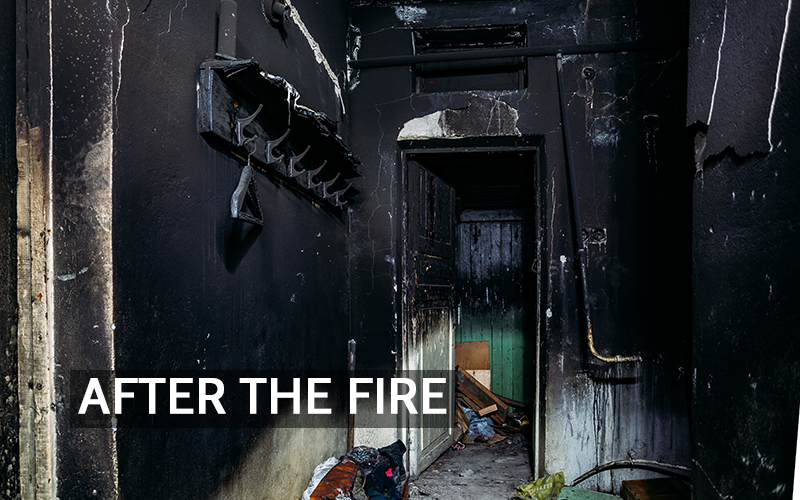
When firefighters extinguish a house fire, the emergency may be over, but the damage is rarely limited to the area that burned. Heat can weaken structural materials, smoke can travel throughout the building, and water used during firefighting can soak walls, flooring, insulation, and personal belongings.
Post-fire remediation is the process of making the building safe, removing contamination, drying wet materials, restoring indoor air quality, and rebuilding damaged areas. Even a relatively small fire can require several different specialists because the visible damage may represent only part of the problem.
Safety Comes Before Cleanup
Homeowners should not enter a fire-damaged building until the fire department or local building authority says it is safe. Floors, roofs, stairways, and walls may have been weakened by heat or water. Electrical wiring can be damaged, gas lines may be unsafe, and hidden areas may continue to smolder.
The insurance company should generally be contacted before major cleaning or disposal begins. Photographs, videos, inventories, receipts, and written notes help document the loss. Removing items too early can make it more difficult to determine what was damaged and what may be covered.
Once access is permitted, professionals inspect the structure, utilities, roof, windows, doors, and areas opened by firefighters. Temporary fencing, roof tarps, boards, locks, or structural supports may be installed to prevent weather damage, theft, collapse, or unauthorized entry.
Fire Damage Includes Water Damage
Water can spread far beyond the fire itself. Fire hoses, sprinklers, broken plumbing, and damaged roofing may leave parts of the house saturated.
Restoration crews use moisture meters, infrared cameras, and physical inspections to locate water in walls, floors, ceilings, and insulation. Standing water is extracted, and wet materials are exposed so they can dry. Commercial air movers and dehumidifiers may operate for several days while technicians track moisture levels.
This step must begin quickly. Wet drywall, carpet padding, insulation, wood, and furniture can support mold growth or begin to break down. Materials that cannot be dried and cleaned safely may need to be removed.
Professionals also distinguish between relatively clean water and water contaminated by sewage, chemicals, fire debris, or dirty surfaces. Heavily contaminated materials require more restrictive handling and disposal.
Soot Is More Complicated Than Ordinary Dust
Soot is a mixture of fine particles and chemical residues formed when materials burn incompletely. Its composition depends on what burned, how hot the fire became, and whether it smoldered or burned with open flames.
Burned wood may produce dry, powdery residue. Plastics, oils, rubber, upholstery, electronics, and synthetic building materials can produce greasy or chemically complex deposits. A kitchen fire may create oily residue that spreads well beyond the stove, while a slow-burning fire may produce smoke that penetrates deeply into porous materials.
Improper cleaning can smear soot or push it farther into walls, fabric, unfinished wood, artwork, and electronics. Restoration workers first identify the affected materials and select appropriate dry-cleaning sponges, HEPA vacuums, detergents, solvents, or specialized surface treatments.
Dry sweeping, leaf blowing, and ordinary shop vacuums can place fine ash back into the air. Professional cleanup instead uses containment, damp cleaning, and HEPA-filtered equipment to collect particles without spreading them into clean areas.
Containment Protects the Rest of the House
Not every fire requires the entire home to be demolished. Professionals divide the building into areas based on the severity of fire, smoke, and water damage.
Plastic barriers may separate contaminated rooms from unaffected spaces. Air machines equipped with HEPA filters can create negative pressure, causing air to move into the work area rather than allowing soot and dust to escape from it. Workers may wear protective clothing, gloves, eye protection, and properly selected respirators.
Controlled demolition removes materials that are charred, structurally damaged, heavily contaminated, or impossible to clean. This may include drywall, insulation, carpet, ceiling tiles, cabinets, and sections of framing.
Older homes require special caution. Fire and demolition can disturb asbestos-containing insulation, floor tile, siding, pipe covering, or textured materials. Damaged lead-based paint may also become part of the dust. These materials should be assessed and handled by appropriately trained professionals rather than included in ordinary debris removal.
Cleaning the HVAC System and Indoor Air
Smoke can enter return vents and travel through ductwork, spreading residue to rooms that were never close to the fire. Heating and cooling equipment may need inspection before it is operated.
Professionals examine filters, ducts, blower compartments, coils, insulation, and other accessible components. Filters are replaced, and contaminated sections may be cleaned or removed. Duct cleaning is not automatically required after every fire, but it may be appropriate when visible soot or odor has entered the system.
Portable HEPA air-cleaning machines can reduce airborne particles during remediation. Ventilation may also be used when outdoor conditions and building safety allow it.
Odor-control products are applied only after contaminated material has been removed and surfaces have been cleaned. Simply covering an odor with fragrance does not remove its source. Ozone generators are sometimes marketed for smoke odors, but ozone is a lung irritant and should never be operated in occupied spaces. Any specialized odor treatment should be performed under controlled conditions by trained personnel.
Restoring Furniture and Personal Belongings
Restoration companies inspect household contents and classify them as salvageable or unsalvageable. Clothing, bedding, furniture, documents, photographs, electronics, dishes, and artwork require different treatments.
Items may be photographed, labeled, packed, and taken to a controlled facility for cleaning. Textiles may receive specialized laundering or dry cleaning. Documents and photographs may be carefully dried and cleaned, while electronics may need inspection for soot, corrosion, heat, and water damage before being powered on.
Food, medicine, cosmetics, and porous items exposed to intense heat, smoke, or contaminated water are often discarded because they cannot be reliably cleaned.
Rebuilding and Final Verification
Reconstruction should begin only after damaged materials have been removed, remaining surfaces have been cleaned, and the structure has dried. Electricians, plumbers, HVAC technicians, roofers, and licensed builders repair the systems within their areas of expertise.
Before reoccupation, the home should have no remaining moisture problems, visible soot, unstable materials, or unexplained smoke odors. Complex losses may involve post-cleaning inspections, surface sampling, air testing, or an independent indoor-environmental professional. Testing is most useful when it answers a specific question rather than being used as a substitute for thorough cleaning.
Homeowners can help by documenting belongings, communicating with the insurer, protecting undamaged records, and reviewing the written scope of work. Entering unsafe areas, disturbing ash, opening electrical equipment, removing questionable building materials, or attempting major odor treatment should be left to professionals.
A fire-damaged house is not repaired simply by replacing what burned. True remediation addresses structure, water, soot, hazardous materials, indoor air, personal property, and the systems hidden behind walls. Professional coordination is important because each step affects the next—and mistakes made during early cleanup can spread contamination or make valuable materials impossible to restore.
References
- https://www.usfa.fema.gov/prevention/home-fires/after-a-fire/
- https://www.epa.gov/natural-disasters/dealing-debris-and-damaged-buildings
- https://www.epa.gov/mold/homeowners-and-renters-guide-mold-cleanup-after-disasters
- https://www.epa.gov/mold/mold-cleanup-your-home
- https://www.cdc.gov/natural-disasters/safety/returning-home-after-natural-disaster.html
- https://www.cdc.gov/natural-disasters/safety/what-you-can-do-to-protect-your-respiratory-health-during-disaster-cleanup.html
- https://www.cdc.gov/niosh/outdoor-workers/about/wildfire-cleanup-hazards.html
- https://www.epa.gov/asbestos/im-remodeling-my-home-do-i-need-be-concerned-about-asbestos-building-materials
- https://www.epa.gov/indoor-air-quality-iaq/ozone-generators-are-sold-air-cleaners
- https://cdphe.colorado.gov/iaq-fires
- https://www.portland.gov/fire/your-safety/what-do-after-fire-out