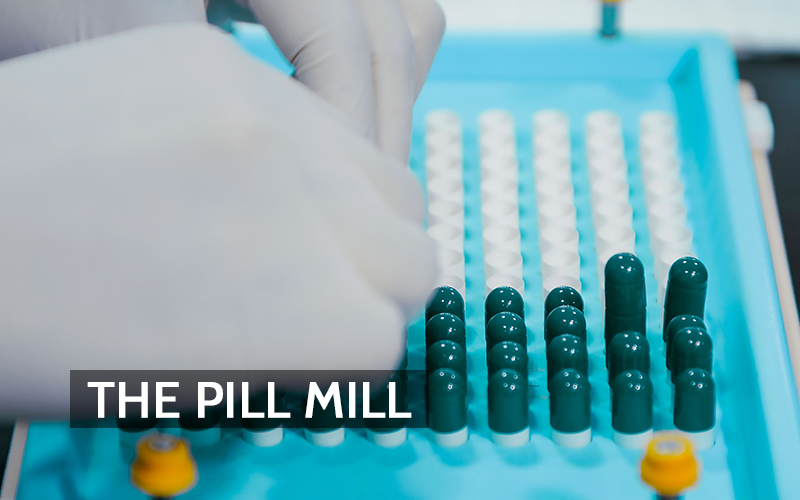
A finished tablet holds a measured dose in a compact form. Before it reaches a package, its ingredients may pass through several machines as loose powders or granules. Each transfer creates an opportunity for small particles to escape into workplace air. Keeping this dust under control protects workers and helps prevent one medicine from contaminating another.
What the Dust Contains
Powders include active pharmaceutical ingredients, or APIs, which provide a medicine’s intended effect. They also include excipients, which add bulk, hold tablets together, or help them break apart after swallowing. Being suitable for swallowing in a finished tablet does not establish safety for breathing the material as workplace dust. Depending on the ingredient and exposure, airborne powder may cause irritation, allergic reactions, or unwanted drug effects. Potent APIs can require strict controls even when the airborne amount is small.
Weighing, Blending, and Granulation
Production often begins with weighing ingredients for a batch. Opening containers, scooping powder, and pouring it into equipment can send particles into the air. Blending distributes ingredients through the mixture, while loading and emptying the blender create further opportunities for dust release. The points where material enters or leaves equipment deserve as much attention as the machine’s main enclosure.
Some formulations go through granulation, which gathers fine powder into larger grains with properties suited for pressing. Wet granulation adds liquid and requires a drying stage. Dried material may then be milled or screened, potentially releasing fine particles again. Other formulations use blends that can go directly to tablet compression without granulation.
Pressing, Coating, and Packaging
A tablet press feeds the prepared material into small cavities and compresses it into tablets. Powder can escape around feeding and discharge points unless these are enclosed and controlled. Tablet dedusters remove loose surface powder after pressing. That removed dust also needs containment as it moves into a collection system.
Some tablets next receive a sprayed coating that dries as they tumble inside coating equipment. Coatings may use water or organic solvents, with solvent-based processes potentially releasing volatile organic compounds, or VOCs. Dust and coating spray also require control. During packaging, tablets can shed particles as they move, rub together, or become chipped before bottles or blister packs are sealed. Extraction and enclosures can therefore remain useful well beyond the powder-mixing stage.
Containing Dust at Its Source
Closed-transfer systems connect containers and processing equipment through sealed pathways, reducing open pouring. Enclosed weighing stations and isolators provide additional separation between workers and powders. An isolator may use glove ports so an operator can handle material inside a sealed enclosure. Local exhaust ventilation captures dust close to a release point before it spreads through the room. General room ventilation supports these controls, while source capture directly addresses the dust-producing task.
Room Pressure Adds Another Barrier
Dust-generating rooms may operate at lower pressure than adjacent corridors. This relative negative pressure directs air inward and helps keep powder from spreading to other rooms. The building can still be at higher pressure than outdoors, with filtered supply air protecting exposed products. Gauges, alarms, and controlled doors help preserve the intended airflow. Workers near an open powder source still need effective containment and extraction.
Measuring Exposure and Managing Cleanup
Personal air samplers collect material near a worker’s nose and mouth to assess breathing-zone exposure. Samples can be analyzed for the specific API being handled. General particle measurements help locate dusty tasks, but they do not identify which drug is present. Results need to be assessed against exposure limits or control targets appropriate to the ingredient. Sampling during transfers, equipment opening, and cleanup can reveal exposures that routine room measurements miss.
Cleaning, equipment opening, and filter changes can release dust that was previously contained. Appropriate HEPA-filtered vacuums help remove settled powder without blowing it back into the room. Compressed-air blowdowns can put settled dust back into breathing air. Collected powder and used filters require contained handling and disposal. Protective clothing and properly selected respiratory protection may be needed based on the job and exposure assessment.
References
- NIOSH: Evaluation of Exposures to Dust and Noise at a Pharmaceutical Manufacturing Facility
- WHO: HVAC Guidelines for Non-Sterile Pharmaceutical Products
- WHO: Good Manufacturing Practices for Pharmaceutical Products Containing Hazardous Substances
- UK Government: Formulation and Finishing of Pharmaceutical Products
- Naumann and Colleagues: Performance-Based Exposure Control Limits for Pharmaceutical Active Ingredients