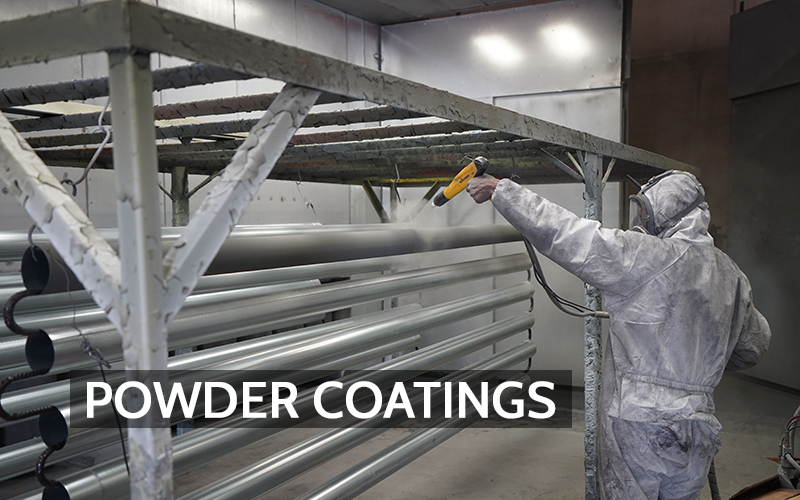
Powder coating gives appliances, metal furniture, and industrial parts a durable finish. The coating begins as fine, dry material that is sprayed into the air. After the coated part passes through an oven, the powder becomes a continuous protective film. The air-quality challenges follow each stage, from handling fresh powder to capturing overspray and removing oven emissions.
What Is in the Powder?
Coating powders contain polymer resins, pigments, hardening agents, and other additives. Epoxy and polyester resins are common examples. The dry mixture generally avoids the liquid solvent carrier used in conventional solvent-based paints, greatly reducing solvent emissions during spraying. Airborne powder still presents an inhalation hazard that depends on its ingredients and the amount of exposure. Some ingredients can cause irritation or allergic reactions, including work-related asthma.
From the Spray Gun to the Booth
Compressed air carries powder through a spray gun, where the particles receive an electrical charge. The grounded workpiece attracts the charged particles onto its surface. Powder that misses the part becomes overspray, which must be captured. Gun settings, part grounding, and spraying technique all affect how much material becomes overspray.
A ventilated booth draws air inward through its openings and carries suspended powder toward collection equipment. Its purpose is to contain the cloud near the process and limit its escape into the shop. Worker position matters because leaning into the booth can put someone directly in the powder cloud. Booth openings, replacement air, and interference from nearby air currents all affect capture performance. A running fan alone does not establish that the booth is controlling exposure effectively.
Capturing and Recovering Overspray
Depending on the system, cyclone separators or filters remove powder from the booth’s air stream. Recovered powder may be screened, mixed with fresh material, and returned to the process when product requirements allow. This can reduce waste and the amount of new coating material needed. However, transferring recovered powder, emptying collectors, changing filters, and cleaning during color changes can release dust. These tasks need containment and exposure controls as much as routine spraying does.
What Comes From the Curing Oven?
Oven heat melts the deposited powder so it flows into a continuous layer. In common thermosetting coatings, chemical reactions also link the resin molecules into a hardened network. Depending on the formulation, heating can release organic vapors from ingredients that evaporate or from products of the curing reactions. These emissions are generally much lower than those from conventional solvent-based coating systems, but they still need consideration.
The amount and composition of curing emissions depend on the resin, additives, temperature, and time. Oven temperature control and suitable exhaust help manage these releases. Fuel-burning ovens also produce combustion exhaust that requires proper handling. A filter designed to collect booth powder does not replace the controls needed for oven gases and vapors.
Housekeeping Is Part of Air Control
Escaped powder can settle on floors, equipment, beams, and other surfaces. Movement, maintenance, or cleaning can lift it back into breathing air. Suitable industrial vacuum equipment captures dust, while dry sweeping and compressed-air blowdowns can create new clouds. Vacuum equipment must be selected for the powder’s fire and electrical hazards as well as its filtration needs. Cleaning plans also need to cover overhead deposits and dusty waste containers.
Many coating powders contain combustible organic material. A sufficiently concentrated dust cloud can ignite if it encounters an ignition source. Inside confined equipment, such as a collector, rapid burning can produce a damaging pressure rise. Grounding, control of ignition sources, appropriate equipment design, and preventing dust accumulation all help manage this hazard. Keeping a cloud below an explosive concentration does not, by itself, establish safe breathing conditions.
Checking Controls During Real Work
Airflow measurements, filter inspections, and maintenance checks help establish whether capture systems are performing as intended. Worker exposure assessments should cover spraying, powder loading, recovery work, and cleanup. Personal air sampling can help evaluate what reaches a worker’s breathing zone, with results interpreted for the powder’s actual ingredients. Training, protective clothing, and properly selected respiratory protection support these controls where the task requires them. Assessments need updating when powders, equipment, production rates, or working methods change.